
A hernia may seem harmless at first, but delaying treatment allows the weakened muscle wall to stretch further, increasing the risk of serious complications later on. Recognising the warning signs early helps you seek timely care before the condition becomes an emergency.
Fortunately, laparoscopic hernia repair surgery offers a minimally invasive solution for many patients, often with faster recovery than traditional surgery.
Before discussing these warning signs, it's worth understanding why many people postpone hernia surgery despite ongoing symptoms.
Why Do People Delay Hernia Surgery in the First Place?

Many people delay hernia treatment because symptoms appear mild initially. However, risks of delayed hernia surgery include worsening pain, bowel obstruction, and life-threatening complications if the hernia becomes trapped or strangulated.
Common Reasons Patients Postpone Treatment
Many patients continue their daily routine because the hernia causes little discomfort in the early stages. Others worry about surgery, recovery time, or taking leave from work. Unfortunately, waiting does not repair the weakened abdominal wall, and the hernia often becomes larger over time.
- Mild or occasional symptoms seem manageable.
- Fear of surgery or anaesthesia.
- Busy work or family commitments.
- Concerns about treatment costs.
- Temporary relief after lying down or resting.
- Assuming a support belt is a permanent solution.
Why “It’s Not That Bad Yet” Is a Risky Assumption
A painless or easily reducible hernia can still worsen unexpectedly. As the opening in the abdominal wall enlarges, the risk of tissue becoming trapped increases. Delaying treatment may reduce surgical options and increase the likelihood of requiring emergency surgery instead of a planned minimally invasive procedure.
- Early treatment is usually safer and easier.
- Hernias rarely heal without surgery - (source)
- Symptoms may worsen without warning.
- Larger hernias are often more difficult to repair.
- Emergency surgery carries greater health risks.
6 Warning Signs You Shouldn’t Ignore
Recognising these warning signs early helps determine when hernia surgery should be considered urgent.
1. Increasing Size or Visibility of the Bulge
A hernia that gradually becomes larger or more noticeable usually indicates the abdominal wall defect is widening and the condition is progressing.
- The bulge enlarges over weeks or months.
- More noticeable when standing, coughing, or lifting.
- Larger hernias are less likely to improve without surgery.
- Progression may increase the risk of incarceration.
2. Pain That Worsens With Movement or Standing
Pain that becomes more frequent or intense during daily activities suggests the hernia is placing increasing strain on surrounding tissues.
- Pain worsens while lifting, coughing, or bending.
- Discomfort may limit normal activities.
- Symptoms become more persistent over time.
- Increasing pain can indicate the need for surgical review.
3. The Bulge No Longer Goes Back In
An irreducible hernia may indicate that abdominal tissue has become trapped, increasing the risk of bowel obstruction or strangulation.
- The bulge remains even when lying down.
- Gentle pressure does not reduce the swelling.
- This is known as an incarcerated hernia.
- Requires urgent surgical assessment.
4. Nausea, Vomiting, or Loss of Appetite
Digestive symptoms with a hernia may suggest that part of the intestine is becoming obstructed and needs immediate medical attention.
- Nausea or repeated vomiting.
- Difficulty eating or reduced appetite.
- Abdominal bloating or inability to pass gas.
- May indicate bowel obstruction.
5. Fever Along With Abdominal Discomfort
Fever accompanied by worsening pain around a hernia can indicate inflammation or reduced blood supply to trapped tissue.
- Fever is not expected in an uncomplicated hernia.
- Pain may become constant and severe.
- The affected area may feel increasingly tender.
- Requires urgent medical evaluation.
6. Sudden, Severe Pain (Possible Strangulation)
Sudden, severe pain with a firm, tender bulge is one of the most concerning symptoms of hernia strangulation and requires emergency surgery.
- Blood supply to trapped tissue may be cut off.
- The bulge may become red, purple, or dark.
- Severe pain is often accompanied by nausea or vomiting.
- Delayed treatment can lead to bowel tissue death.
If you notice any of these warning signs, seek prompt assessment through our general & laparoscopic surgery department at Dumdum, to determine whether timely surgical treatment is needed.
What Actually Happens Inside Your Body When Hernia Surgery Is Delayed?
Many patients ask, is untreated hernia dangerous? Yes. Delaying treatment allows the hernia to progress, increasing the risk of trapped bowel, obstruction, strangulation, and emergency surgery.
How a Simple Hernia Can Become a Medical Emergency
A hernia may gradually trap abdominal tissue, reducing its ability to move freely and increasing the likelihood of serious complications.
- The abdominal wall opening can widen over time.
- Fat or bowel may become trapped inside the defect.
- An incarcerated hernia cannot be pushed back into the abdomen.
- The risk of emergency surgery increases if symptoms worsen.
Why Strangulation and Obstruction Are Life-Threatening
Strangulation cuts off blood supply to trapped bowel, while obstruction blocks intestinal contents, making both conditions medical emergencies requiring immediate surgery.
- Lack of blood flow can damage bowel tissue.
- Bowel obstruction prevents normal passage of food and gas.
- Delayed treatment may lead to tissue death or infection.
- Emergency surgery is often required to prevent life-threatening complications.
Why Laparoscopic Repair Is Often the Safer, Faster Option

When comparing laparoscopic vs open hernia surgery, the best approach depends on the hernia type, size, previous surgeries, and your overall health.
How It Differs From Open Surgery
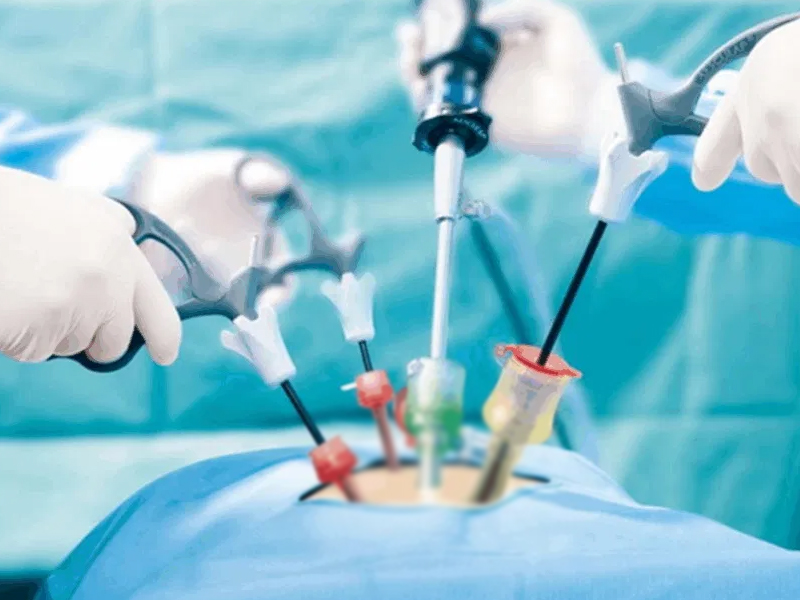
- Uses small keyhole incisions instead of one larger incision.
- A camera provides a magnified internal view for the surgeon.
- Surgical instruments are inserted through small ports.
- Mesh is commonly placed to reinforce the abdominal wall.
- May be suitable for bilateral or recurrent hernias in selected patients.
- Choice of technique depends on individual clinical evaluation.
Benefits of Minimally Invasive Repair
- Smaller incisions generally result in less postoperative pain.
- Lower risk of wound-related complications in appropriate patients.
- Most patients return to normal activities sooner than after open repair.
- Minimal scarring compared with conventional surgery.
- Shorter hospital stay for many uncomplicated cases.
- Early mobilisation helps support recovery.
Learn more about laparoscopic hernia repair at Phoenix Medical Centre, to understand whether a minimally invasive approach is suitable for your condition.
What Should You Ask Your Doctor Before Booking Surgery?
Preparing the right questions to ask before hernia surgery helps you understand your treatment options, recovery expectations, potential risks, and make a more informed decision.
Questions About the Procedure Itself
- Is laparoscopic surgery suitable for my hernia?
- Will surgical mesh be used?
- What type of anaesthesia is required?
- How long will the procedure take?
Questions About Recovery and Risks
- When can I return to work?
- What activities should I avoid after surgery?
- What are the possible complications?
- How can I reduce the risk of recurrence?
Questions About the Surgeon’s Experience
- How often do you perform hernia repairs?
- Do you routinely perform laparoscopic repairs?
- What are your outcomes for similar cases?
- Who will be involved in my care?
To learn more about the team performing hernia procedures, meet our surgical specialists at Dumdum.
How Long Is Recovery After Laparoscopic Hernia Surgery?
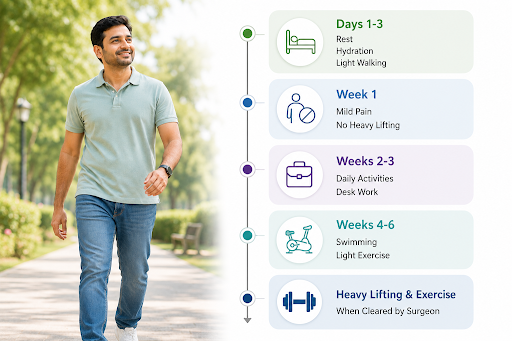
Typical Recovery Timeline
- Days 1-3: Rest, hydration, and light walking are encouraged. Mild to moderate discomfort is normal.
- Week 1: Pain usually becomes mild. Showering is generally allowed after 36-48 hours. Avoid lifting more than 10 lbs.
- Weeks 2-3: Swelling reduces, and most patients can resume normal daily activities and desk work.
- Weeks 4-6: Most daily activities, including swimming and stationary cycling, are usually safe.
When You Can Resume Normal Activity
- Driving: Usually after 2-4 days, once narcotic pain medication is no longer required and an emergency stop can be performed comfortably.
- Work: Desk-based jobs can often be resumed within 1-2 weeks, while manual labour may require 4-6 weeks.
- Exercise & Lifting: Avoid heavy lifting and high-impact exercise for at least 4 weeks or until cleared by your surgeon.
Recovery Time After Hernia Surgery: At a Glance
| Recovery Stage | Typical Timeline |
| Walking | Within 24 hours (light walking encouraged) |
| Driving | 2-4 days (if off narcotic pain medication) |
| Desk Work | 1-2 weeks |
| Daily Activities | 2-3 weeks |
| Heavy Lifting (>9 kg/20 lbs) | After 4-6 weeks |
| Sports & Strenuous Exercise | After 4-6 weeks, with surgeon's clearance |
Why Choose Phoenix Medical Centre for Hernia Surgery in Dumdum?
If you're looking for a top-class hospital for laparoscopic hernia repair surgery, at our top-class multi-specialty centre, we combine experienced surgeons, advanced laparoscopic techniques, and comprehensive surgical care under one roof.
- Experienced general & laparoscopic surgery team
- Modern operation theatres and advanced surgical technology
- Personalised treatment and recovery planning
- Complete pre-operative, surgical, and post-operative support under one roof
You can also explore our gallbladder and appendix surgery services to learn more about our minimally invasive surgical expertise.
Call 92309 78181 to book your surgical consultation today.
People Also Ask
What are the warning signs that a hernia needs urgent surgery?
A painful, irreducible bulge, severe abdominal pain, nausea, vomiting, fever, skin discoloration, or sudden swelling may indicate bowel obstruction or strangulation and require immediate emergency medical attention.
Is it dangerous to delay hernia surgery?
Yes. Delaying surgery increases the risk of incarceration, bowel obstruction, and strangulation. These complications may require emergency surgery instead of a planned minimally invasive procedure.
What happens if a hernia is left untreated for too long?
Most hernias do not heal on their own. Over time, the defect may enlarge, symptoms often worsen, and the risk of trapped bowel and emergency complications increases.
What is a strangulated hernia and why is it an emergency?
A strangulated hernia occurs when blood supply to trapped tissue is cut off. Without urgent surgery, the affected bowel can become permanently damaged within hours.
Is laparoscopic hernia surgery safer than open surgery?
Neither approach is universally safer. International guidelines recommend selecting laparoscopic or open repair based on hernia type, patient factors, and the surgeon's expertise.
How long does it take to recover from laparoscopic hernia repair?
Most patients resume light activities and desk work within 1-2 weeks, while complete recovery, including heavy lifting and strenuous exercise, usually takes 4-6 weeks.
What questions should I ask my surgeon before hernia surgery?
Ask whether laparoscopic repair is suitable, whether mesh will be used, expected recovery time, possible complications, recurrence risk, and the surgeon's experience with similar procedures.
Can a hernia go away without surgery?
No. Adult hernias do not heal spontaneously because the weakened abdominal wall cannot repair itself. Surgery is the only definitive treatment for most hernias.
Is laparoscopic hernia surgery painful?
Most patients experience mild to moderate discomfort rather than severe pain. Smaller incisions generally result in less postoperative pain compared with conventional open surgery.
How do I know if my hernia is getting worse?
Increasing bulge size, worsening pain, inability to push the hernia back, nausea, vomiting, or sudden severe pain suggest progression and require prompt surgical assessment.
Can I go back to work soon after hernia surgery?
Many patients with desk-based jobs return within 1-2 weeks. Physically demanding work involving heavy lifting typically requires a recovery period of 4-6 weeks.