

Yes. Kidney disease can often be managed for years without a transplant by slowing further damage, controlling complications and preserving remaining kidney function.
Transplantation is generally considered only in kidney failure. Treatment depends on the cause, function, urine albumin levels and rate of progression. Since this disease may advance silently, early nephrology assessment is essential. However, don’t worry; this blog explains how kidney disease can be managed without a transplant through early diagnosis, medicines, diet, lifestyle changes and timely nephrologist care.
Understanding Chronic Kidney Disease
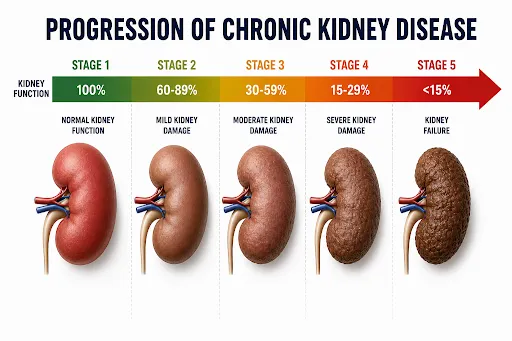
Chronic kidney disease (CKD) refers to kidney damage or reduced function lasting at least three months. Since early CKD may cause no symptoms, diagnosis often involves eGFR, uACR, blood pressure and glucose checks, repeated tests and imaging when needed.
Effective chronic kidney disease management considers both eGFR and albuminuria, as creatinine alone does not provide the complete picture. Those seeking nephrology treatment in should begin with a detailed assessment rather than assume dialysis or transplantation is inevitable.
Stages of Chronic Kidney Disease
The stages of chronic kidney disease are commonly classified according to eGFR:
| Stages | eGFR (mL/min/1.73 m²) | General interpretation |
| G1 | 90 or above | Normal or high filtration with other evidence of kidney damage |
| G2 | 60–89 | Mild reduction with other evidence of kidney damage |
| G3a | 45–59 | Mild-to-moderate reduction |
| G3b | 30–44 | Moderate-to-severe reduction |
| G4 | 15–29 | Severe reduction |
| G5 | Below 15 | Failure |
The stage is only one part of the assessment. Urine albumin levels also matter because greater albumin leakage may indicate more damage and a higher risk of progression.
According to the National Kidney Foundation, about 1 in 7 adults in the United States has this disease without knowing it. In the Indian context, as per a source, chronic kidney disease affected approximately 10.5%–12.5% of people across Indian states in 2025.
These stats highlight a broader clinical concern: this disease can remain silent while damage develops.
What the Stage Actually Means for Your Treatment Path
Two patients with the same eGFR may have different risks depending on albuminuria and the rate of kidney-function decline. The CKD stage helps determine monitoring frequency, medicines and dosage adjustments, dietary support, complication management, and when to discuss dialysis or transplant evaluation.
Can Kidney Disease Be Reversed?
The answer depends on the cause of the decline.
Some acute kidney problems may improve when dehydration, infection, urinary obstruction or medication-related injury is treated promptly. Chronic scarring, however, is usually permanent. Therefore, the honest answer to “can kidney disease be reversed?” is that established CKD generally cannot be completely reversed.
That does not make treatment pointless. The decline in function can sometimes be slowed considerably, and some patients remain stable for many years.
Be cautious with products that claim to cleanse, detoxify or regenerate damaged kidneys. Unregulated herbal products and supplements can interact with prescribed medicines or directly harm this organ in question.
Non-Surgical Kidney Disease Treatment — What’s Actually Available
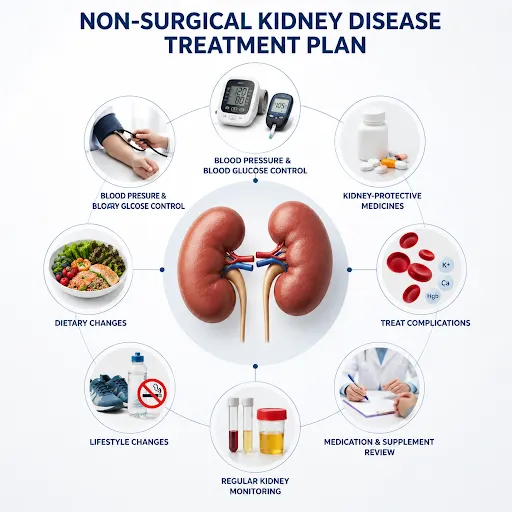
Most chronic kidney disease care begins without surgery. Non-surgical kidney disease treatment aims to preserve remaining function, address the underlying cause and control complications affecting the heart, blood vessels, bones and blood.
A treatment plan may include:
- Blood pressure and blood glucose control
- Kidney-protective medicines when clinically suitable
- Treatment for anaemia, fluid retention or mineral imbalance
- Dietary changes based on blood and urine test results
- Smoking cessation, suitable physical activity and weight management
- Review of prescription medicines, painkillers and supplements
- Regular monitoring of eGFR, electrolytes and urine albumin
There is no one-size-fits-all prescription. A treatment that benefits one patient may be unnecessary or unsuitable for another.
Medication for Kidney Disease
The choice of medication for the disease depends on the cause, stage, test results and associated health conditions.
A doctor may consider:
- ACE inhibitors or ARBs, particularly for hypertension with albuminuria
- SGLT2 inhibitors for eligible patients with kidney disease, with or without diabetes
- Medicines to improve blood glucose control
- Diuretics to manage fluid retention or hypertension
- Iron or erythropoiesis-stimulating treatment for selected cases of CKD-related anaemia
- Treatment for high potassium, acidity or mineral and bone disorders
Kidney function and potassium levels may need to be checked after starting or adjusting certain medicines. Never stop prescribed medication because of a change in creatinine without asking the treating doctor to interpret the result.
Managing Underlying Causes
Diabetes and high blood pressure are major causes of kidney disease, but they are not the only ones. Glomerular diseases, inherited conditions, recurrent infections, urinary obstruction and prolonged exposure to kidney-harming medicines may also contribute.
Management may involve controlling blood sugar and blood pressure, treating inflammation or obstruction and avoiding unnecessary non-steroidal anti-inflammatory medicines such as ibuprofen or diclofenac.
Identifying the cause matters. Controlling it often provides the best opportunity to preserve remaining kidney function.
Kidney Disease Diet and Lifestyle — Your First Line of Defence
An individualised kidney disease diet and lifestyle plan supports medical treatment; it does not replace it.
Helpful measures may include:
- Reducing excess salt
- Avoiding smoking
- Staying physically active within safe limits
- Maintaining a suitable body weight
- Taking prescribed medicines consistently
- Avoiding unnecessary painkillers and unverified supplements
- Monitoring blood pressure and glucose as advised
Fluid intake must be individualised. “Drink as much water as possible” can be unsafe advice for someone with severe chronic kidney disease, swelling, heart disease or reduced urine output.
Foods to Limit and Foods That Help
| Usually helpful | May need limiting |
| Fresh, minimally processed meals | Packaged foods high in sodium |
| Suitable portions of fruit and vegetables | Pickles, papad, salty snacks and instant foods |
| Clinician-recommended protein portions | Excessive meat or high-protein supplements |
| Home-cooked food with controlled salt | Processed meats and salty sauces |
| Balanced portions suited to glucose control | Sugary drinks and heavily refined foods |
Potassium and phosphorus should not automatically be restricted in every CKD diet. The need depends on the disease stage, laboratory results, medicines and whether the person receives dialysis.
Why Early Lifestyle Changes Matter Most
Lifestyle changes are most effective when started early. Reducing salt and managing blood pressure and diabetes can protect kidney function. Although these changes cannot reverse kidney scarring, they may slow further decline and support heart health.
Delaying Dialysis Naturally — Is It Really Possible?
“Delaying dialysis naturally” can be misleading. No food, drink or supplement can safely replace dialysis when the kidneys can no longer remove waste or maintain fluid balance.
CKD progression may be slowed through evidence-based care, including:
- Keeping diabetes and blood pressure under control
- Taking prescribed kidney-protective medicines
- Following a personalised diet plan
- Avoiding medicines and supplements that may harm this organ
- Treating infections or urinary blockages promptly
- Attending regular follow-up appointments
The aim is to delay the failure safely—not to postpone necessary dialysis after dangerous complications have appeared.
When Is Dialysis Necessary?
It is generally considered when severely reduced function causes problems that medicines and dietary measures can no longer control.
Possible indications include:
- Persistent fluid overload or breathlessness
- Dangerous potassium or acid-base imbalance
- Uraemic symptoms, such as persistent nausea, poor appetite, confusion or severe itching
- Inflammation around the heart related to kidney failure
- Progressive nutritional decline
- Complications that no longer respond adequately to medical treatment
Do not initiate dialysis based solely on eGFR. According to KDIGO, the decision should also consider symptoms, clinical signs, laboratory findings, quality of life and patient preferences.
Early-Stage Kidney Disease Treatment — Why Timing Changes Everything
Early-stage kidney disease treatment creates time to investigate the cause, address preventable damage and monitor the rate of progression.
Early care commonly focuses on:
- Confirming that abnormalities have persisted for at least three months
- Measuring eGFR and urine albumin
- Managing blood pressure, diabetes and cardiovascular risk
- Reviewing medicines, painkillers and supplements
- Establishing an appropriate monitoring schedule
Waiting for swelling, reduced urine output or extreme fatigue can mean losing valuable treatment time. Screening is especially important for people with diabetes, hypertension, heart disease, previous kidney injury or a family history of failure.
What a Nephrologist Actually Does for You

Nephrologists evaluate kidney function and identify the cause. Then they select suitable nephrology treatment options. A nephrologist may:
- Confirm the diagnosis and identify the likely cause
- Interpret eGFR alongside urine albumin and imaging results
- Estimate the risk and likely rate of progression
- Adjust medicines for reduced kidney clearance
- Treat anaemia, electrolyte problems and mineral disorders
- Coordinate dietary and lifestyle support
- Discuss dialysis or transplant evaluation when necessary
For personalised nephrology treatment, connect with Phoenix Medical Centre in Dum Dum, Kolkata. Early assessment can help clarify changing test results and guide timely treatment.
A Diagnosis Isn’t a Countdown
Chronic kidney disease does not always lead to dialysis or transplantation. Early diagnosis, regular monitoring and appropriate treatment may preserve kidney function and slow progression. Reach out to us and talk to our experts to turn uncertain test results into a clear kidney care plan.
People Also Ask For
1) Does a chronic kidney disease diagnosis always mean I'll eventually need dialysis?
No. The rate of progression varies considerably. Some people maintain stable function for years, particularly when CKD is detected early, and its causes and risk factors are properly controlled.
2) Can diet alone control kidney disease, or is medication always necessary?
Diet alone is rarely the complete treatment. Some patients also need medication for hypertension, diabetes, albuminuria or chronic kidney disease-related complications. Treatment should be based on the diagnosis and current test results.
3) How often should kidney function be monitored once diagnosed?
Monitoring may range from annual reviews in low-risk cases to every few weeks or months in advanced or rapidly changing disease. The stage, urine albumin, medicines and rate of decline influence the schedule.
4) Are diabetes and high blood pressure the main causes of kidney disease progression?
They are among the leading causes. However, this disease may also result from inflammatory or inherited diseases, urinary obstruction, recurrent infections and medication-related kidney injury.
5) What symptoms suggest kidney disease is worsening and needs urgent attention?
Seek prompt medical attention for increasing breathlessness, marked swelling, confusion, persistent vomiting, chest discomfort, severe weakness, very low urine output or rapidly rising blood pressure.