
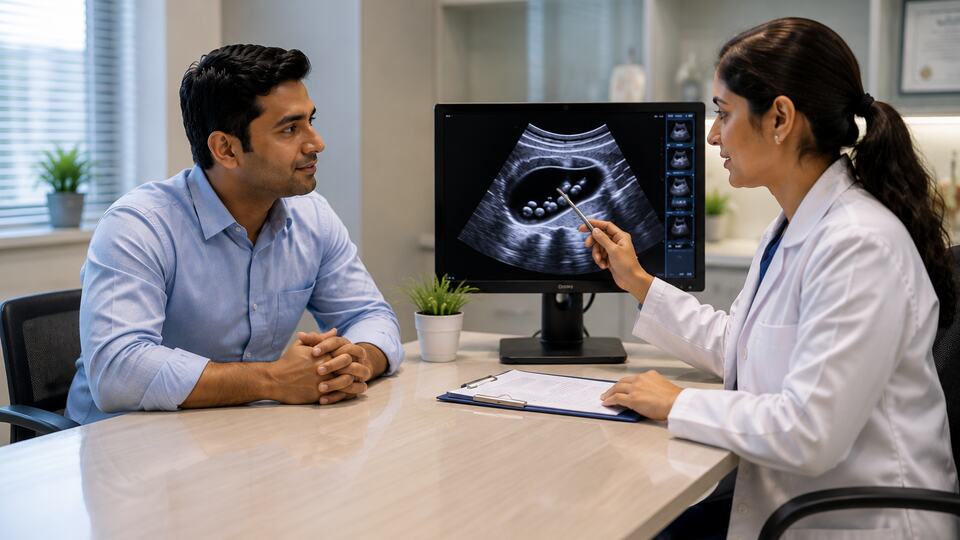
An ultrasound shows gallstones, yet there has been no sharp pain, vomiting or obvious digestive trouble. Does that mean wait and watch? In most cases, yes. Treatment for asymptomatic gallstones often includes careful monitoring. However, treatment depends on gallstone size and position, gallbladder changes, and associated medical conditions. This blog will clear up any doubts about when silent gallstones need monitoring or surgery, along with key risks, complications, and recovery.
What Are Silent (Asymptomatic) Gallstones?
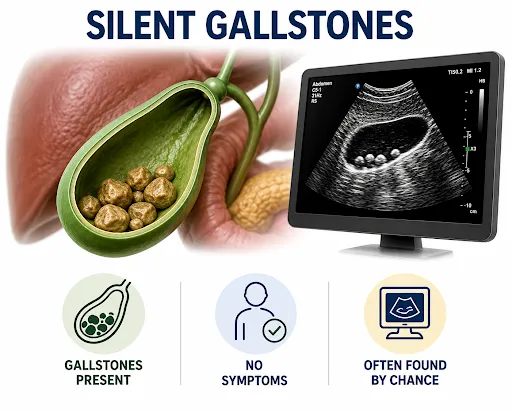
Silent or asymptomatic gallstones are hardened deposits in the gallbladder that cause no typical symptoms, although some people may experience vague bloating or indigestion. They form when the bile components, usually cholesterol or bilirubin, become concentrated and harden.
Most uncomplicated cases do not require immediate treatment. National Institute for Health and Care Excellence (NICE) recommends reassurance and monitoring when the gallbladder and biliary system are otherwise normal.
Incidental Gallstones on Ultrasound
Incidental gallstones on ultrasound are stones found during a scan performed for another reason, such as fatty liver, kidney concerns or non-specific abdominal discomfort. Their presence does not confirm that they are causing digestive symptoms, as acidity, gas, irritable bowel syndrome and ulcers can cause similar discomfort. Removing the gallbladder may therefore not resolve symptoms unrelated to the stones.
The ultrasound report should be reviewed for:
- Number and approximate size of stones
- Gallbladder wall thickening or calcification
- Polyps, sludge or surrounding inflammation
- Enlargement of the common bile duct
- Stones within the bile duct
- Other liver, pancreatic or abdominal findings
How Common Is It to Have Gallstones Without Pain?
Silent stones are far from unusual. As per the source, roughly 80% of people carrying gallstones are asymptomatic. Most silent stones remain harmless. However, some may cause discomfort, inflammation or bile-duct complications depending on the stone and the patient’s health.
Do Gallstones Always Need Surgery?
No. Gallstones without pain, inflammation, or bile-duct abnormalities can often be managed with a wait-and-watch approach rather than preventive surgery. Waiting does not mean ignoring the condition. It means:
- Understanding which symptoms require medical attention
- Reviewing new or changing digestive complaints
- Repeating tests when clinically advised
- Managing diabetes and other health conditions properly
- Avoiding rapid or unsupervised weight-loss programmes
The decision changes once typical biliary discomfort or a gallstone-related complication develops. Surgery may then offer a clearer benefit.
When Silent Gallstones Still Warrant Surgery
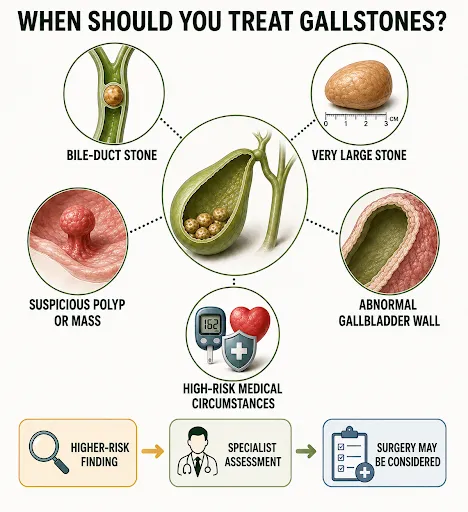
Preventive gallbladder removal is not routine, but it may be considered when imaging or medical history points to a higher-than-usual risk. Possible reasons include:
- Stones inside the common bile duct, even without pain
- A very large gallstone (often defined as larger than 3 cm)
- A suspicious gallbladder polyp or mass
- Marked or irregular gallbladder wall thickening
- Certain patterns of gallbladder calcification
- Sickle cell disease or hereditary spherocytosis
- Planned organ transplantation or significant immunosuppression
- Poor access to emergency medical care if a complication occurs
- Another planned abdominal operation in selected circumstances
These are reasons for specialist assessment, not automatic instructions to operate.
Gallstone Complications If Untreated
Gallstone complications, if untreated, mainly arise when a stone moves and blocks the normal flow of bile.
| Complication | What happens | Possible warning signs |
| Biliary colic | A stone temporarily blocks the gallbladder outlet | Steady upper-right or upper-middle abdominal pain, often after food |
| Acute cholecystitis | The gallbladder becomes inflamed | Persistent discomfort, fever, tenderness and vomiting |
| Choledocholithiasis | A stone enters the common bile duct | Jaundice, dark urine, pale stools or abnormal liver tests |
| Cholangitis | An obstructed bile duct becomes infected | Fever, chills, discomfort and jaundice |
| Gallstone pancreatitis | A migrating stone obstructs drainage near the pancreas | Severe upper abdominal pain, often extending to the back |
The US National Institute of Diabetes and Digestive and Kidney Diseases advises urgent medical attention when discomfort and irritation are prolonged or accompanied by vomiting, fever, chills or jaundice.
Risk Factors That Change the Recommendation
Certain findings deserve closer discussion.
- Diabetes: Diabetes by itself is not a universal indication for preventive surgery. Older practice sometimes favoured early removal, but current recommendations are more selective. Poorly controlled diabetes, reduced immunity and other medical problems may still affect the balance between observation and planned treatment.
- Large stones: Stones above approximately 3 cm have been associated with higher risks of gallbladder complications and malignancy. The absolute cancer risk remains low, so consider size alongside age, scan findings, and surgical fitness.
- Porcelain gallbladder: This term describes calcium deposits in the gallbladder wall. Cancer risk depends partly on the calcification pattern. It requires surgical review, but removal is not inevitable in every case.
- Family history: A family history of gallstones alone usually does not justify surgery. A strong family history of gallbladder cancer, particularly when accompanied by suspicious imaging findings, carries greater relevance.
Silent Gallstones Risk in Specific Patient Groups
The silent gallstones risk may be treated differently in people with haemolytic blood disorders such as sickle cell disease or hereditary spherocytosis. These conditions encourage pigment-stone formation, and gallstone symptoms can be confused with pain from the underlying illness.
People awaiting organ transplantation or prolonged immunosuppressive treatment may also need individual assessment. Infection can become harder to recognise or manage after immunity has been suppressed.
Gallbladder Removal Without Symptoms — Is It Ever the Right Call?
Yes, but only for selected patients. Gallbladder removal without symptoms can be reasonable when the estimated risk of leaving the gallbladder in place is greater than the combined risks of anaesthesia and surgery.
Common bile-duct stones, suspicious structural changes and certain high-risk disorders carry more weight than the simple presence of a few silent stones.
A useful decision is rarely based on a single item in an ultrasound report. It follows a conversation about what could happen with observation, what surgery can prevent and what risks the procedure itself introduces.
Laparoscopic Cholecystectomy — What the Procedure Involves
Laparoscopic cholecystectomy removes the gallbladder through several small abdominal incisions. A camera provides a magnified view while the surgeon separates and removes the organ. The operation is performed under general anaesthesia.
The main laparoscopic cholecystectomy indications include symptomatic gallstones, acute or recurring gallbladder inflammation, gallstone pancreatitis and bile-duct complications. Selected high-risk asymptomatic cases may also qualify.
Surgeons usually do not remove stones while leaving the gallbladder behind. A gallbladder that continues producing or holding stones can cause the problem to return, which is why the organ itself is generally removed.
Most people can digest food without a gallbladder because the liver continues making bile. It simply flows more continuously into the intestine instead of being stored.
Gallbladder Surgery Recovery — What to Expect
Gallbladder surgery recovery varies with the patient’s health, the reason for surgery and whether the operation remains laparoscopic.
Many patients having a planned laparoscopic procedure return home the same day or after a short hospital stay. Walking usually begins within hours. Temporary soreness, bloating, nausea or shoulder-tip discomfort may occur.
A typical recovery may include:
- Light daily activity within a few days
- Desk-based work in approximately one to two weeks
- Gradual return to normal meals according to tolerance
- Avoidance of heavy lifting until the surgeon permits it
- Longer recovery if open surgery becomes necessary
These are broad estimates. The operating surgeon’s instructions should take priority.
How Doctors Decide — Monitoring vs. Surgery
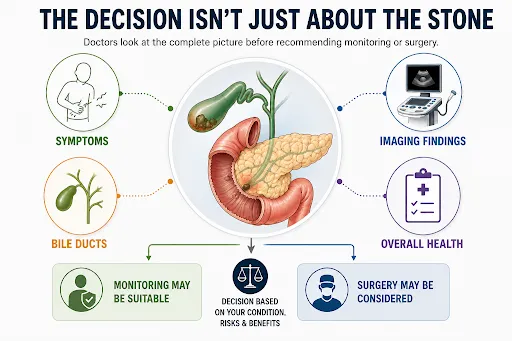
Doctors recommend monitoring or surgery only after a detailed review of your symptoms, medical history, and overall health.
The assessment may include: abdominal ultrasound, liver function tests, blood count and inflammatory markers, pancreatic enzyme tests when pancreatitis is suspected, MRCP to examine the bile ducts, endoscopic ultrasound in selected unclear cases, and ERCP when a bile-duct stone requires treatment.
Once the assessment is complete, the doctor weighs the likely benefit of surgery against the safety of continued observation.
| Monitoring may be suitable when | Surgery may be considered when |
| There are no typical gallstone symptoms | Typical gallstone attacks have occurred |
| The gallbladder and bile ducts appear normal | A stone is present in the common bile duct |
| The stones are uncomplicated | There is inflammation, pancreatitis or jaundice |
| No suspicious wall changes or polyps are seen | Imaging shows concerning structural changes |
| The risks of surgery outweigh the likely benefit | The risk of future complications outweighs the operative risk |
If your scan unexpectedly finds stones, arrange a clinical review instead of deciding from the report alone. Seeking gallbladder stone removal in Dumdum? Consult a laparoscopic surgeon who can assess the stones, bile ducts, gallbladder structure and your wider health together.
“No Pain” Doesn’t Always Mean “No Risk
Most silent gallstones can be safely monitored. Sounds reassuring, doesn’t it? But silence does not mean there’s no risk. A bile-duct stone, suspicious gallbladder change, very large stone or high-risk medical condition may justify deeper investigation.
You may start with scanning, but don’t rely on this for decision-making. Consider a detailed gallbladder assessment to choose the safest next step.
What People Also Ask
- If my gallstones aren't causing pain, is it safe to just leave them untreated?
Yes. If they are not causing symptoms or complications, doctors may recommend regular monitoring rather than surgery.
- What symptoms should make me reconsider a "wait and watch" approach?
Consult a doctor if you develop persistent upper abdominal uneasiness, fever, vomiting, jaundice, dark urine or pale stools.
- Are diabetics with silent gallstones at higher risk of complications?
Not always. The decision depends on blood sugar control, overall health, scan findings and the risk of complications.
- How long does recovery take after laparoscopic gallbladder removal?
Many patients resume light activities within a few days and desk-based work within one to two weeks.
- Can gallstones come back after the gallbladder is removed?
Gallbladder stones cannot return once the organ is removed. However, stones may rarely develop in the bile ducts.