
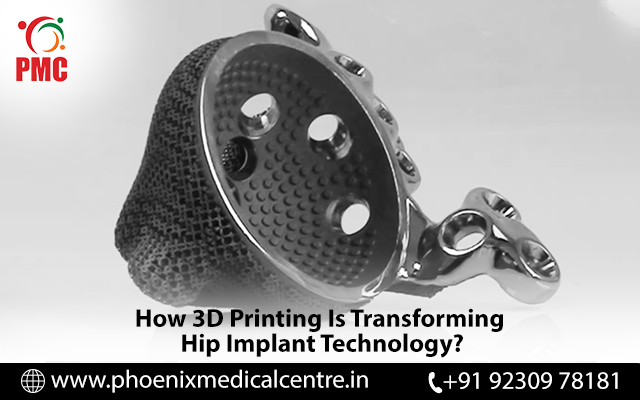
Do you know that 3D printing technology extends beyond consumer and industrial applications and has even revolutionized the medical field? This cutting-edge technology allows medical experts to 3D print custom bone implants, making it a viable option for different hip replacement types of surgery.
Orthopedic surgeons from Phoenix Medical Centre deliver comprehensive orthopedic care to every patient varying from general advice to surgical needs. Here, they explain how this latest technology will make your life easier.
How does 3D Printing work?
The process starts with taking the MRI ( Magnetic Resonance Image) and CT ( Computed Tomography). This gives an accurate image of the bone and joint. The images are then converted into a digital 3D model of the hip joint. This model shows the exact shape and size needed for the implant. Surgeons use this digital model to design a custom implant that fits perfectly into the patient's hip.
The custom design is sent to a 3D printer, which creates the implant layer by layer. This printer uses materials like titanium or special plastics to build the implant with high precision.
Benefits of 3D Printing in Different Hip Replacement Types Surgery
Customized implants
The process of 3D printing allows for the creation of customized hip implants, which are developed according to the patient's hip joint. This personalized process improves the fitting, function and overall structure of hip implants.
Enhanced precision and quality
The detailing of 3D printing ensures implants are made precisely and with exceptional quality. This method focuses on reducing the risk of any further complications or fitting issues. Unlike traditional methods, the implants allow for intricate design to improve the patient's overall quality.
Faster Production and Reduced Costs
The field of 3D printing has revolutionized and is still getting better and faster every day. Earlier, this process took around 2-3 weeks, which has significantly been reduced to half of the time. This industry is still growing rapidly with the incorporation of artificial intelligence into the field.
Innovative Materials
3D printing supports the use of advanced biomaterials that promote better integration with the bone. Materials like titanium alloys and bioactive ceramics can be used to create implants that enhance bone growth and improve longevity.
Improved Surgical Outcomes
These custom fit implants are contributing to better surgical outcomes. Patients experience reduced pain with increased mobility. These implants are improving their quality of life by eliminating pain and stress from their life.
Conclusion
3D printing technology is transforming surgeries for different hip replacement types including Total Hip Replacement (THR), Partial Hip Replacement (PHR), and Hip Resurfacing. By providing customized, precise implants, it enhances surgical outcomes, speeds up production, and improves patient quality of life.