
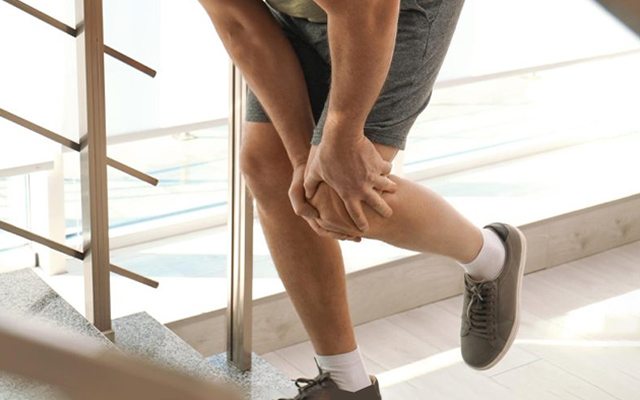
Climbing stairs should feel effortless. But when a sharp twinge, dull ache, or discomfort starts appearing in your knees—especially while going up or down—it’s rarely “just strain.”
For many people in Dumdum and across Kolkata, where daily life often involves climbing apartment stairs, using footbridges, or frequent commuting, this is often the first early warning sign of joint stress or damage—long before pain shows up during walking or rest.
If you’re noticing this, it’s worth paying attention early.
Why Knee Pain Happens While Climbing Stairs
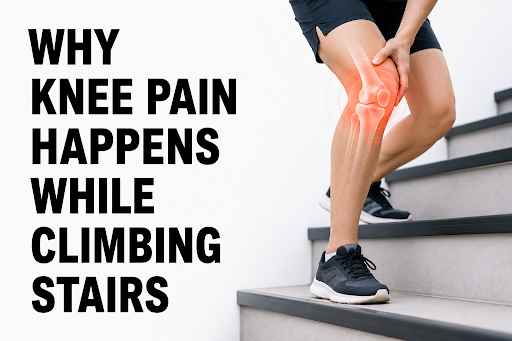
Knee pain while climbing stairs is often an early sign of joint stress or damage, as stair movement places 3–4 times body weight on the knees. Common causes include patellofemoral pain syndrome, early cartilage wear, and osteoarthritis.
Pain while going downstairs may indicate increased joint load. If symptoms persist beyond 1–2 weeks, consulting a knee specialist in Dumdum is recommended to prevent progression.
Why Does Knee Pain Happen While Climbing Stairs?
Stair movement puts 3–4 times your body weight on your knee joints—far more than walking on flat ground.
Inside the knee:
- The joint bends deeply
- The kneecap presses tightly against the thigh bone
- Muscles and ligaments must stabilize the movement
Even a small imbalance becomes noticeable here first.
Common triggers:
- Weak thigh (quadriceps) muscles
- Poor kneecap alignment
- Early cartilage wear
- Joint inflammation
Here’s what most people miss: You may feel completely fine while walking—but stairs expose hidden joint problems early.
What This Means for Your Knee
- Stair pain often appears before pain during normal walking
- It usually indicates early-stage joint imbalance, not severe damage yet
- This is the best stage for non-surgical treatment
- Progression happens mainly when symptoms are ignored
In simple terms: This is the stage where early action can completely change the outcome.
What Your Knee Pain Could Be Telling You
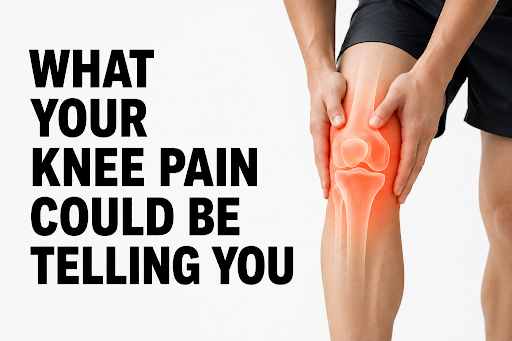
Knee pain on stairs is rarely random. It usually points to specific underlying issues.
1. Patellofemoral Pain Syndrome (Runner’s Knee)
What happens: The kneecap doesn’t glide properly.
Symptoms:
- Front knee pain
- Worse while climbing stairs or squatting
- Pain after prolonged sitting
- Clicking or grinding
2. Early Cartilage Damage (Chondromalacia)
Cartilage acts as a smooth cushion. When it starts wearing down:
Early signs:
- Grinding sensation
- Pain during bending
- Stiffness after activity
This is where it gets serious: This stage is often reversible—but only if treated early.
3. Early Osteoarthritis
A gradual wear-and-tear condition, common after 40.
Key signs:
- Knee pain while going downstairs
- Morning stiffness
- Reduced flexibility
- Crackling sounds
4. Meniscus Injury
The knee’s shock absorber may get damaged.
Watch for:
- Sharp pain on stairs
- Locking or catching sensation
- Swelling
Stair Pain vs Walking Pain: What’s the Difference?
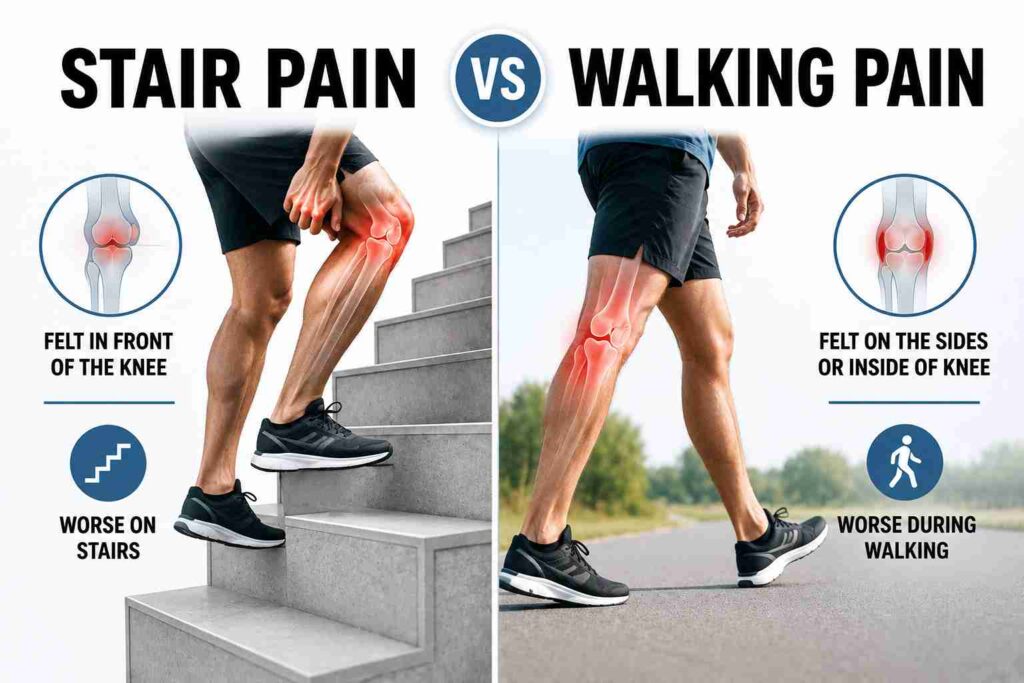
| Symptom Type | What It Usually Indicates |
| Pain only on stairs | Early joint stress / alignment issue |
| Pain while going downstairs | Higher knee joint load, possible cartilage wear |
| Pain during walking | More advanced inflammation or degeneration |
| Pain at rest/night | Possible progression requiring urgent evaluation |
This comparison helps identify how early or advanced the condition may be.
Early Warning Signs You Should NOT Ignore
Many people delay care until pain worsens.
Red flags:
- Pain lasting more than 1–2 weeks
- Swelling or visible changes
- Knee “giving way”
- Pain at rest or at night
- Difficulty bending or straightening
Take Action Before It Progresses
If these signs sound familiar, early evaluation by a knee specialist in Dumdum can prevent long-term damage.
✔ Accurate diagnosis
✔ Targeted physiotherapy
✔ Non-surgical recovery options
What Happens If You Ignore It?
Delaying treatment can lead to:
- Faster cartilage degeneration
- Chronic inflammation
- Reduced mobility
- Increased likelihood of surgery
This is where many patients regret waiting. Early-stage problems are often simple to manage—late-stage ones are not.
Don’t Wait for Severe Pain
Persistent stair pain is already a signal—not a minor issue.
A consultation at an orthopaedic hospital in Dumdum can help detect the problem early and avoid complications.
Immediate Relief: What You Can Do at Home
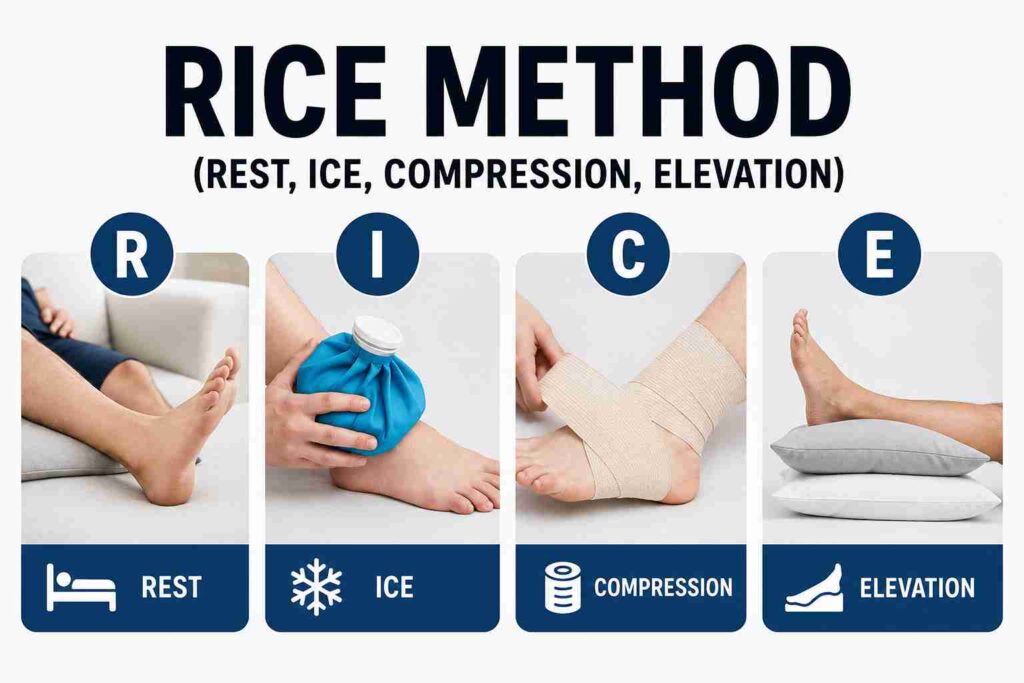
If symptoms are mild, start with basic care:
R.I.C.E Method
| Step | What to Do |
| Rest | Avoid stairs and high-impact activity |
| Ice | Apply 15–20 minutes every 2–3 hours |
| Compression | Use knee support |
| Elevation | Keep leg raised |
Lifestyle Adjustments
- Avoid deep squats
- Use handrails while climbing
- Wear supportive footwear
- Maintain healthy weight
Best Non-Surgical Treatments
Most early-stage knee issues respond well to conservative treatment.
1. Physiotherapy & Strength Training
- Strengthens thigh and hip muscles
- Improves joint alignment
- Reduces long-term stress
2. Stretching & Mobility
- Relieves tight muscles
- Improves movement
3. Posture Correction
- Fixes movement patterns
- Prevents recurrence
4. Medical Management
- Anti-inflammatory medication
- Knee support/bracing
- Injections (if required)
When Should You See a Knee Specialist?
You should not rely on home care alone if:
- Pain affects daily activity
- You avoid stairs
- Symptoms keep returning
- Swelling or stiffness persists
What to Expect During Diagnosis
A structured evaluation helps identify the exact issue.
Step 1: Physical Examination
Movement, alignment, swelling
Step 2: Imaging (if needed)
- X-ray → bone condition
- MRI → cartilage, ligaments
Step 3: Root Cause Analysis
- Muscle imbalance
- Cartilage wear
- Structural issue
Step 4: Personalised Treatment Plan
Orthopaedic evaluation helps distinguish muscular vs structural causes, ensuring the right treatment.
Prevention Tips for Long-Term Knee Health
✔ Stay active without overloading joints
✔ Strengthen leg muscles regularly
✔ Maintain healthy body weight
✔ Avoid prolonged sitting
✔ Warm up before activity
Proactive Care Makes the Difference
Early care doesn’t just reduce pain—it protects your mobility for years to come. Visiting Phoenix Medical Centre, an orthopaedic hospital in Dumdum and consulting our experienced team at an ensures:
- Early diagnosis
- Personalised recovery plan
- Prevention of long-term joint damage
Final Takeaway
Knee pain while climbing stairs is not just a minor inconvenience. It is often the earliest signal your knee joint gives before deeper damage begins.
Acting early can mean:
- Faster recovery
- No surgery
- Long-term joint protection
Ignoring it, on the other hand, can lead to complications that are much harder to treat.
If you or a family member in Dumdum is experiencing this issue, don’t wait for it to worsen.
Call 92309 78181 and visit Phoenix Medical Centre, a trusted orthopaedic hospital in Dumdum today to consult our doctors.
People Also Ask
Why does knee pain feel worse while going downstairs than upstairs?
Descending stairs increases pressure on the kneecap and demands better control, revealing early cartilage stress. It is often one of the earliest functional warning signs.
Can knee pain on stairs happen even without any injury?
Yes, it often develops due to muscle imbalance, poor posture, or early joint wear rather than a sudden injury. Sedentary lifestyle and long sitting hours are common contributors.
Does knee pain while climbing stairs always mean arthritis?
Not always; it can also be due to patellofemoral pain syndrome or early cartilage softening. However, untreated cases may progress toward arthritis over time.
Is it safe to continue exercising with knee pain on the stairs?
Low-impact activities may be continued, but movements that trigger pain should be limited. Proper evaluation helps determine safe exercise modifications.
Can weight gain increase knee pain during stair climbing?
Yes, excess body weight increases load on the knee joint, especially during bending movements like stairs. Even small weight reduction can significantly reduce joint stress.
Are there specific warning signs that indicate serious knee damage?
Symptoms like swelling, instability, locking, or persistent pain beyond two weeks suggest underlying structural issues. These require timely orthopaedic evaluation.
Can improper sitting habits affect knee pain?
Yes, prolonged sitting with bent knees can strain the joint and worsen stiffness. Poor posture also affects alignment, increasing stress during movement.
How important is early diagnosis for knee pain on stairs?
Early diagnosis helps identify reversible conditions before cartilage damage becomes permanent. It also reduces the chances of requiring surgical intervention later.
Can ignoring mild knee pain lead to long-term problems?
Yes, untreated early symptoms can progress into chronic pain, stiffness, and reduced mobility. Delayed care often makes treatment more complex.
When should medical help be considered for stair-related knee pain?
If discomfort persists, worsens, or begins affecting routine activities, clinical evaluation is recommended. Early care improves recovery outcomes significantly.