
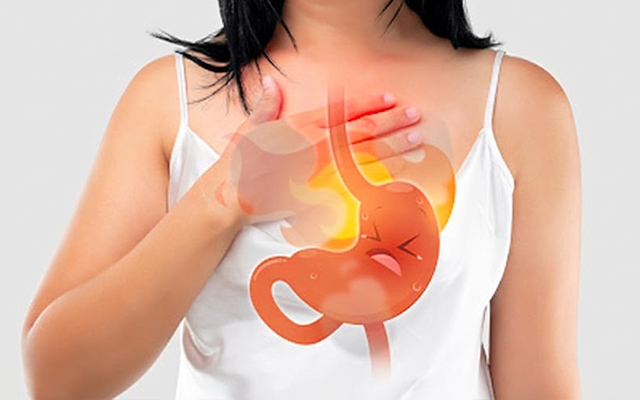
Frequent post-meal acidity is not always caused by spicy food or overeating. Burning sensation, bloating, heaviness after eating, sour burps, or repeated indigestion may sometimes indicate acid reflux, gastritis, ulcers, or chronic stomach irritation. Many people continue self-medicating while the underlying digestive problem gradually worsens.
At Phoenix Medical Centre in Dumdum, experienced specialists provide structured digestive evaluation and personalised treatment for reflux and gastrointestinal disorders. Consult a trusted gastroenterology surgeon for accurate diagnosis and long-term digestive care.
Understanding why acidity develops after meals helps identify the real cause behind recurring symptoms.
Why Does Acidity Happen After Eating?
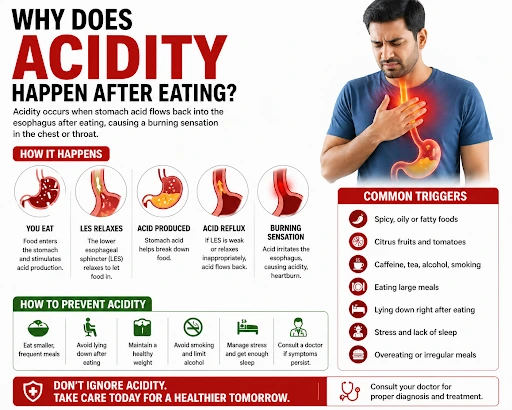
Your stomach naturally produces acid to break down food. Normally, this acid stays inside the stomach where it belongs.
But after eating, especially large or heavy meals, pressure inside the stomach can increase. In some people, acid moves upward into the food pipe, creating a burning sensation in the chest or throat.
This becomes more noticeable after:
- Overeating,
- Eating too quickly,
- Lying down immediately after meals,
- Or consuming trigger foods regularly.
The discomfort may feel temporary at first. But if reflux keeps recurring, the digestive tract may remain irritated for long periods.
Many people describe this as:
- Chest burning,
- Sour taste in the mouth,
- Bloating after meals,
- Excessive burping,
- Or a feeling that food is “coming back up.”
Occasional reflux is common. Persistent acidity after meals is where the pattern begins to change.
When acidity becomes predictable after food rather than occasional, doctors begin looking beyond temporary indigestion and toward recurring digestive dysfunction.
Not Every “Acidity” Problem Comes From the Same Condition
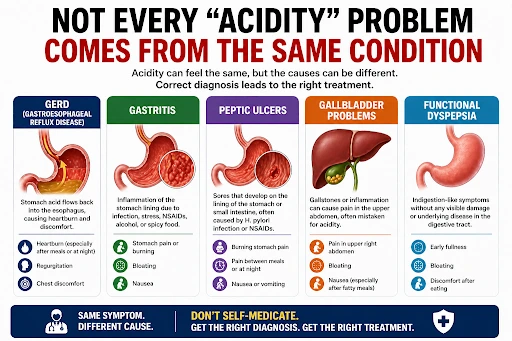
One reason recurring acidity becomes confusing is that multiple digestive disorders can initially feel very similar. One reason recurring acidity becomes confusing is that multiple digestive disorders can initially feel very similar.
GERD (Gastroesophageal Reflux Disease)
GERD happens when stomach acid repeatedly flows upward into the oesophagus. Unlike occasional reflux, GERD tends to become frequent and predictable.
Common signs include:
- Burning after meals,
- Throat irritation,
- Sour regurgitation,
- Nighttime discomfort,
- Symptoms that worsen while lying down.
Some people also develop a chronic cough or a constant need to clear their throat.
Gastritis
Gastritis refers to inflammation of the stomach lining. Instead of chest burning, the discomfort often feels more centred in the upper abdomen.
People commonly describe:
- Stomach irritation,
- Nausea,
- Fullness after small meals,
- Reduced appetite,
- Or discomfort shortly after eating.
Long-term painkiller use, alcohol, stress, and bacterial infections may contribute to gastritis in some cases.
Peptic Ulcers
Ulcers are sores that develop in the stomach or upper part of the small intestine. The pain pattern can feel very different from ordinary acidity.
Some people notice:
- Localised burning pain,
- Pain between meals,
- Temporary relief after eating,
- Or discomfort that returns a few hours later.
Ulcers are commonly linked with H. pylori infection and prolonged use of certain medications.
Gallbladder Problems
Not all post-meal discomfort comes from stomach acid.
Gallbladder-related symptoms often appear after oily or fatty meals and may cause:
- Bloating,
- Pressure under the ribs,
- Nausea,
- Or heaviness that lasts for hours.
The discomfort may spread toward the back or right shoulder in some individuals.
Functional Dyspepsia
Some people experience ongoing indigestion symptoms even when scans and tests appear normal.
Functional dyspepsia may cause:
- Early fullness,
- Uncomfortable bloating,
- Upper abdominal pressure,
- And repeated post-meal discomfort without a visible structural disease.
This is one reason self-diagnosing “acidity” becomes difficult.
Different digestive conditions can create surprisingly similar symptoms in the early stages.
That similarity is one reason many people continue self-medicating for months without realising the underlying condition may be completely different from what they assumed.
Table Overview
| Condition | What People Commonly Notice |
| GERD | Burning chest discomfort and sour reflux after meals |
| Gastritis | Upper abdominal irritation and nausea |
| Peptic Ulcer | Localised burning pain that may change with eating |
| Gallbladder Problems | Heaviness and bloating after oily foods |
| Functional Dyspepsia | Fullness and discomfort even after small meals |
When Acidity Starts Becoming a Red Flag
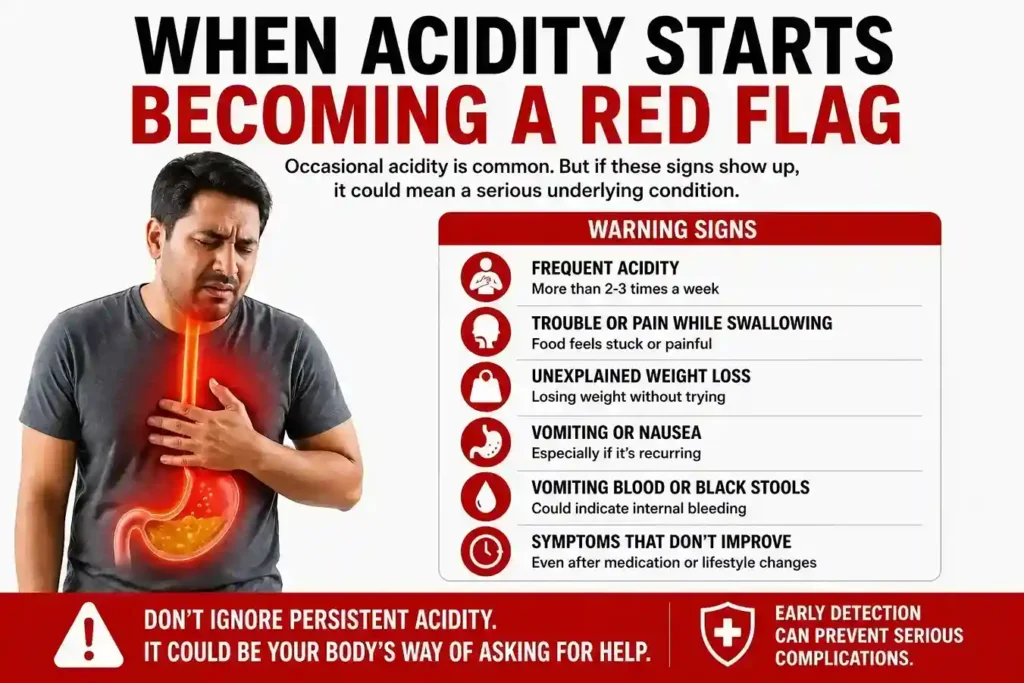
- Difficulty swallowing
- Vomiting or vomiting blood
- Black or tar-like stools
- Unexplained weight loss
- Chest discomfort unrelated to exertion
- Severe acidity that repeatedly disrupts sleep
- Burning sensations lasting for weeks despite medication or lifestyle changes
Long-term acid exposure can damage the food pipe lining and worsen inflammation or ulcers. Many people gradually normalise chronic digestive symptoms, delaying diagnosis and treatment of potentially serious gastrointestinal conditions.
Table Overview
| Symptom Pattern | Why It Should Not Be Ignored |
| Difficulty swallowing | May indicate ongoing irritation or narrowing of the food pipe |
| Black stools | Can suggest digestive bleeding |
| Nighttime reflux | Repeated acid exposure may be affecting the oesophagus |
| Unexplained weight loss | Requires proper digestive evaluation |
| Vomiting blood | Needs urgent medical attention |
Everyday Habits That Quietly Keep Acid Reflux Active
- Late-night meals followed by lying down
- Excess tea, coffee, energy drinks, or caffeine intake
- Skipping meals and overeating later
- Chronic stress, anxiety, and poor sleep
- Smoking and regular alcohol consumption
- Sleeping or napping immediately after eating
For many working professionals, reflux is often caused by recurring lifestyle factors rather than a single food. Persistent acidity often results from the combined effects of stress, irregular eating, caffeine overload, poor sleep, and late dinners.
Why Temporary Relief From Acidity Can Sometimes Be Misleading
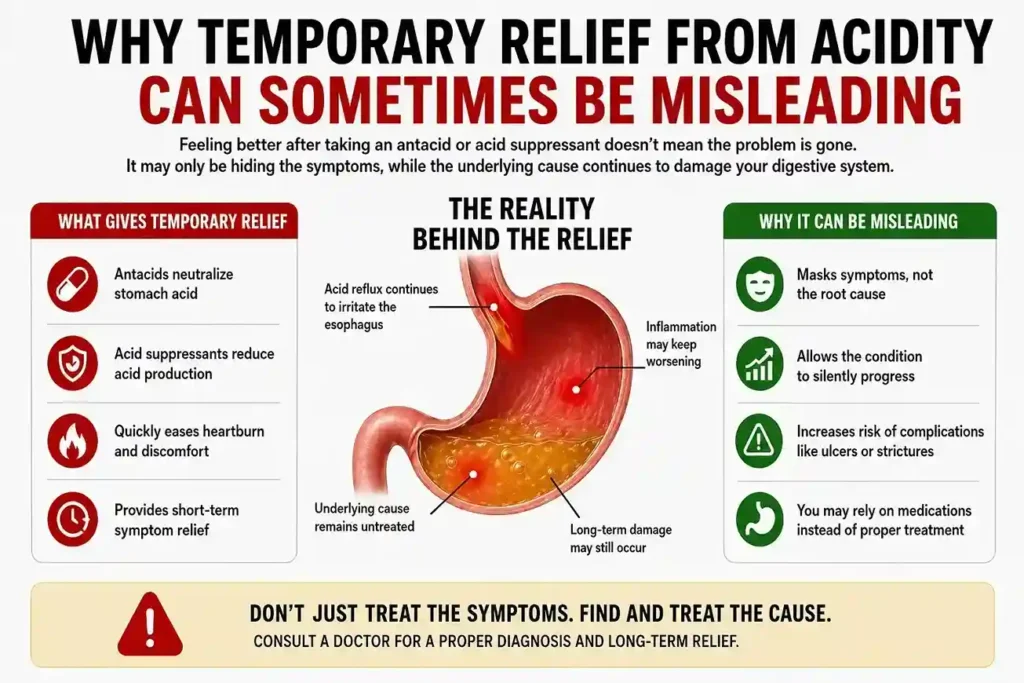
Medications may quickly relieve burning and acidity, but temporary symptom relief does not always indicate that the underlying problem is resolved.
Common concerns include:
- Repeated acidity despite regular antacid use
- Long-term self-medication without medical evaluation
- Dependence on antacids after meals, travel, or before sleep
- Persistent reflux, ulcers, inflammation, or digestive irritation continuing silently
Many people gradually normalise chronic acidity by managing symptoms instead of addressing the root cause. Frequent or recurring acid reflux may require proper digestive evaluation rather than repeated acid suppression alone.
How Gastroenterology Doctors Evaluate Persistent Acidity
- Symptom review: Timing, triggers, bloating, night reflux, and meal-related discomfort
- Upper GI endoscopy: Detects ulcers, inflammation, reflux damage, bleeding, or abnormal tissue changes
- H. pylori testing: Identifies bacteria linked to gastritis and peptic ulcers
- Abdominal ultrasound: Helps rule out gallstones, liver conditions, or other digestive causes
- Blood tests: May detect anaemia, infection, inflammation, or nutritional deficiencies
Proper evaluation helps identify why acidity keeps returning and guides targeted treatment
The gastroenterology team at Phoenix Medical Centre in Dumdum frequently evaluate patients who initially dismissed recurring acidity as routine indigestion for months before seeking proper medical advice.
When Should You See a Gastroenterology Surgeon in Dumdum?
See an expert if
- Acidity appears several times every week,
- Symptoms continue despite medication,
- meals regularly trigger discomfort,
- bloating becomes frequent,
- Sleep gets disturbed because of a burning sensation,
- Or digestive symptoms begin affecting appetite and routine activities.
Some people delay consultation because the symptoms feel manageable. But digestive disorders are often easier to treat when identified earlier, rather than after months of irritation and inflammation.
Digestive conditions often respond better to treatment before chronic inflammation, persistent reflux irritation, or eating-related anxiety start affecting daily quality of life.
If acidity is becoming part of your normal routine rather than an occasional episode, a proper digestive evaluation may help identify what your body has been repeatedly trying to signal.
To Recap
Recurring acidity is common. Repeatedly adapting to it without understanding the cause is where the real risk begins!
At Phoenix Medical Centre, Dum Dum, digestive symptoms are evaluated with a diagnosis-first approach focused on identifying the underlying cause rather than repeatedly masking discomfort.
Our gastroenterology surgeon and accompanying team regularly see patients who have spent months normalising post-meal burning, bloating, or reflux before discovering a treatable digestive condition underneath.
Early evaluation often helps prevent long-term irritation, recurring inflammation, and avoidable complications from conditions that are frequently manageable when identified in time.
📞 Call 9230978181 today and book a consultation.
People Also Ask
Why does acidity sometimes feel worse on an empty stomach?
In some digestive conditions, stomach acid continues irritating sensitive tissue even when there is no food present. This pattern is sometimes associated with ulcers or increased stomach sensitivity.
Can stress alone trigger digestive burning sensations?
Stress can significantly affect digestion. Many people experience worsening bloating, stomach discomfort, nausea, or burning sensations during periods of anxiety, irregular sleep, or emotional strain.
Why do some people feel bloated even after small meals?
Early fullness may occur when digestion slows, the stomach becomes unusually sensitive, or functional digestive disorders disrupt normal food movement.
Can acidity symptoms mimic heart-related discomfort?
Yes. Burning chest discomfort caused by reflux can sometimes feel similar to cardiac pain. Persistent chest symptoms should always be medically evaluated rather than self-diagnosed.
Does milk actually help reduce acidity?
Milk may temporarily soothe burning sensations in some people, but it does not treat the underlying digestive problem. In certain individuals, full-fat dairy products may even worsen symptoms later.
Why do acidity symptoms keep returning after temporary relief?
Temporary symptom control does not always remove the underlying trigger.
Recurring symptoms usually indicate that the underlying digestive trigger is still active, even if short-term medication temporarily reduces discomfort.