

Heavy menstrual bleeding is common—but repeated heavy bleeding every month is not something to ignore.
Many women continue managing symptoms with medication, assuming it’s normal variation.
In clinical practice, however, persistent heavy bleeding usually indicates an underlying condition that needs evaluation—not just control.
When Do Heavy Periods Need Medical Attention?
Heavy periods may need medical evaluation if:
- Bleeding lasts more than 7 days
- Pads/tampons need changing every 1–2 hours
- Large clots are passed frequently
- The same heavy pattern repeats every month
- Fatigue or weakness develops
Persistent symptoms often require diagnosis beyond medication.
What Counts as “Heavy Period Bleeding” Medically?
Doctors define heavy menstrual bleeding based on volume, duration, and impact.
Clinical indicators:
- Bleeding lasting longer than 7 days
- Excessive blood loss (clinically >80 ml per cycle)
- Frequent need to change protection (≤2 hours)
What patients commonly notice:
- Clotting during periods
- Sudden “flooding” sensation
- Weakness or low energy
The key is not a single cycle—but a pattern over time.
Why Monthly Heavy Bleeding Is Treated Differently
Not all heavy periods mean the same thing.
| Pattern | What It Usually Means |
| Occasional heavy cycle | Temporary hormonal fluctuation |
| Repeated monthly heavy bleeding | Likely underlying condition |
When the same pattern repeats, doctors shift from symptom management → cause identification.
The Most Common Causes of Heavy Periods
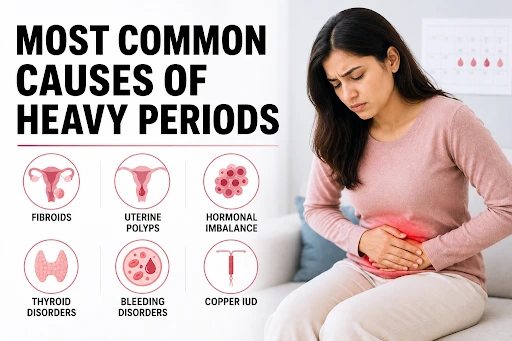
Heavy bleeding is a symptom—not a diagnosis.
Structural causes (detected via imaging)
- Fibroids
- Polyps
- Adenomyosis
Hormonal / functional causes
- PCOS (irregular ovulation)
- Thyroid imbalance
- Endometrial dysfunction
Cause vs Detection
| Type | Examples | How It’s Diagnosed |
| Structural | Fibroids | Ultrasound |
| Hormonal | PCOS | Blood tests |
| Mixed | Adenomyosis | Imaging + symptoms |
Different causes result in different treatments.
Can Stress or Lifestyle Cause Heavy Periods?
Yes—but only to a certain extent.
What lifestyle can influence:
- Ovulation patterns
- Hormonal fluctuations
- Cycle irregularity
Common contributors:
- High stress levels
- Sudden weight gain/loss
- Poor sleep
What it usually does NOT explain:
- Consistent heavy bleeding every month
If the pattern is persistent, lifestyle is rarely the only factor.
Why Medicines Sometimes Stop Working
Many patients experience this cycle:
Relief → recurrence → stronger medication → repeat
Why this happens:
- Medicines regulate hormones temporarily
- They may not address structural issues
Interpretation Guide
| Situation | Likely Explanation |
| Medicines work consistently | Hormonal issue |
| Temporary relief only | Possible structural cause |
This is the point where doctors recommend re-evaluation instead of continuation.
When Heavy Periods Lead to Anaemia
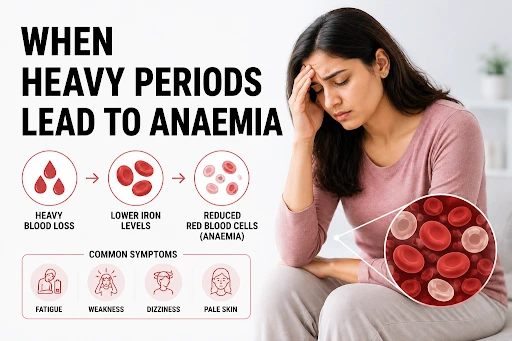
Repeated blood loss affects iron levels over time.
Common symptoms:
- Persistent fatigue
- Dizziness
- Shortness of breath
- Reduced daily stamina
Why it matters:
Anaemia doesn’t just affect periods—it impacts overall health, work capacity, and recovery.
What Tests Are Done to Find the Cause
Diagnosis is structured—not complicated.
First-line evaluation:
- Ultrasound (uterus + ovaries)
- Blood tests (haemoglobin, thyroid, hormones)
Test Overview
| Test | Purpose |
| Ultrasound | Detect fibroids, polyps |
| Blood test | Detect anaemia, hormone imbalance |
Proper diagnosis avoids trial-and-error treatment.
Treatment Options—From Medicines to Procedures
Treatment depends entirely on diagnosis.
Level 1: Medical Management
- Hormonal therapy
- Non-hormonal medication
Level 2: Targeted Procedures
- Polyp removal
- Minimally invasive interventions
Level 3: Advanced Treatment
- Required in selected cases only
Treatment Pathway
| Level | Used When |
| Medicines | Mild/moderate conditions |
| Procedures | Specific structural causes |
| Surgery | Severe or persistent cases |
Do Heavy Periods Always Need Surgery?
No, most heavy period cases do not require surgery. Many are managed with medication or minimally invasive procedures. Surgery is considered only when:
- Structural abnormalities are significant
- Symptoms are severe
- Other treatments are ineffective
Early diagnosis often prevents the need for surgery.
When Should You See a Doctor?
Medical evaluation is recommended if:
- Heavy bleeding happens every cycle
- Symptoms are worsening
- You feel dependent on medication
- Fatigue is affecting daily life
At this stage, continuing self-management delays effective treatment.
Get a Clear Diagnosis Today
At Phoenix Medical Centre, Dumdum, structured evaluation helps identify the exact cause of heavy bleeding.
✔ Advanced ultrasound and diagnostics
✔ Experienced gynaecology team
✔ Personalised treatment plans
Early consultation can prevent long-term complications and unnecessary treatments.
Why Choosing the Right Care Setting Matters
Diagnosis requires coordination between:
- Clinical assessment
- Imaging
- Lab testing
A dedicated gynaecology hospital in Dumdum ensures:
- Faster diagnosis
- Continuity of care
- Immediate treatment decisions
A Simple Self-Assessment
Ask yourself:
- Is this happening every month?
- Am I relying on medicines repeatedly?
- Is my energy or routine affected?
What Your Answers Mean
| Pattern | Recommended Action |
| Occasional | Monitor |
| Repeating | Evaluate |
| Worsening | Consult urgently |
Final Takeaway
Heavy menstrual bleeding is not just about flow—it’s about pattern, cause, and impact.
- Occasional changes may not be serious
- Repeated monthly heavy bleeding needs evaluation
- Early diagnosis leads to simpler treatment
Delaying care often leads to:
- Worsening symptoms
- Increased treatment complexity
Take the Next Step
If heavy periods are becoming a monthly concern, it’s time to move from managing symptoms → understanding the cause.
Call +91 92309 78180 and schedule a visit at Phoenix Medical Centre, Dumdum today.
People Also Ask
Can heavy periods affect fertility?
Heavy periods themselves do not directly cause infertility, but conditions linked to heavy bleeding such as fibroids, adenomyosis, or hormonal imbalance may affect conception. Early evaluation is important if pregnancy planning is a concern.
Why do heavy periods become more common after age 40?
Hormonal changes during perimenopause can make periods heavier or less predictable. However, persistent heavy bleeding after 40 still requires evaluation to rule out fibroids, endometrial changes, or other uterine conditions.
Can copper IUDs make periods heavier?
Yes. Copper intrauterine devices may increase menstrual flow and cramping in some women, especially during the first few months after insertion. Persistent excessive bleeding should still be medically reviewed.
Is pelvic pain along with heavy bleeding a warning sign?
Heavy bleeding combined with pelvic pain may indicate conditions such as adenomyosis, fibroids, endometriosis, or pelvic inflammation. Painful heavy periods that worsen over time should not be ignored.
Can heavy periods happen even with a regular cycle?
Yes. Some women have monthly cycles that remain regular but experience abnormally heavy flow each time. Structural uterine conditions commonly present this way.
Does repeated heavy bleeding increase iron deficiency risk?
Yes. Chronic blood loss can gradually reduce iron stores even before severe anaemia develops. Symptoms may include fatigue, headaches, low stamina, hair fall, or dizziness.
Can obesity or weight changes affect menstrual bleeding?
Sudden weight gain, obesity, or rapid weight loss can influence hormone regulation and ovulation patterns, sometimes contributing to heavier or irregular bleeding.
When are endometrial polyps suspected in heavy periods?
Doctors may suspect endometrial polyps when bleeding occurs between periods, becomes unusually prolonged, or remains persistently heavy despite medication.
Can untreated heavy periods affect daily quality of life?
Yes. Persistent heavy bleeding can impact sleep, work productivity, physical activity, travel confidence, and emotional wellbeing due to fatigue and constant symptom management.
Why is self-treatment risky in long-term heavy bleeding?
Repeatedly relying on over-the-counter medicines or temporary hormonal control may delay diagnosis of the actual cause. Early investigation often allows simpler and more effective treatment.
Can vitamin deficiencies contribute to heavy menstrual bleeding?
Certain nutritional deficiencies, particularly low iron or vitamin K deficiency, may worsen bleeding patterns or recovery from blood loss. However, persistent heavy periods usually require evaluation for an underlying gynaecological cause.
Is sudden worsening of period bleeding considered abnormal?
Yes. A noticeable increase in bleeding intensity, duration, clotting, or cycle disruption compared to previous patterns should be medically assessed, especially if it develops suddenly or continues across multiple cycles.