
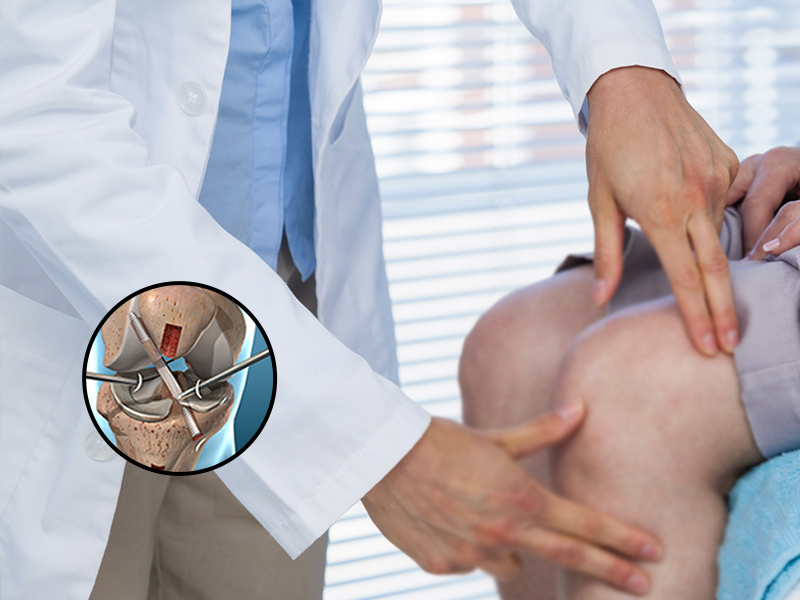
After a sudden knee twist, many people struggle with the ACL tear vs sprain confusion and wonder how to know if you tore your ACL.
The truth is: an ACL tear and a knee sprain may feel similar at first, but doctors distinguish them through the pattern of symptoms, knee stability and clinical examination.
Knowing the difference early helps determine whether you need rest, rehabilitation, or serious ACL repair.
What Is the Difference Between an ACL Tear and a Knee Sprain?
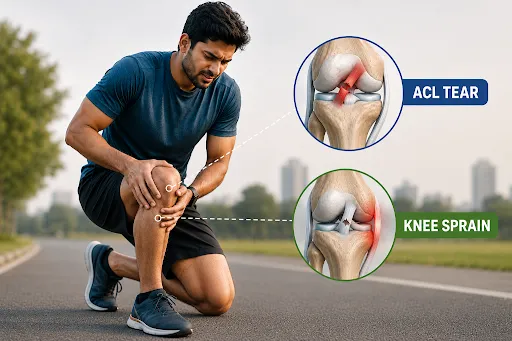
| Feature | ACL Tear | Ligament Sprain |
| Injured structure | Specifically the anterior cruciate ligament | Any knee ligament, including ACL, MCL, LCL or PCL |
| Common cause | Sudden twisting, pivoting or awkward landing | Twisting, falls, direct impact or overstretching |
| Severity | Partial or complete tear | Grade 1 (mild), Grade 2 (partial) or Grade 3 (complete ligament tear) |
| Symptoms | Loud "pop", instability, rapid swelling | Pain, swelling and varying degrees of instability depending on the ligament injured |
| Knee stability | Often feels unstable or gives way | Usually stable in mild sprains; severe sprains may cause instability |
| Treatment | Physiotherapy or reconstruction, depending on the injury | Rest, bracing, physiotherapy or surgery for severe ligament injuries |
If persistent pain, swelling or instability follows a knee injury, our orthopaedic specialists at Phoenix Medical Centre can accurately diagnose whether it is an ACL tear or another ligament sprain and recommend the most appropriate treatment.
What Does an ACL Tear Feel Like?
Common ACL injury symptoms include a popping sensation, sudden knee pain, rapid swelling and instability after a twisting injury. These identifiable signs often make walking, pivoting or bearing weight difficult.
The “Pop” Sound and Immediate Symptoms
- Pop sound in knee
- Sudden sharp pain follows immediately
- Injury occurs during twisting movements
- Activity usually stops instantly
- Knee feels weak after injury
- Weight-bearing becomes difficult quickly
Swelling – How Fast Does It Come On?
- Swelling develops within 2-12 hours
- Bleeding causes joint swelling
- Knee becomes tight and stiff
- Bending becomes increasingly painful
- Full movement becomes restricted
- Early swelling suggests significant injury
Instability – Does Your Knee Feel Like It Will “Give Way”?
- Knee buckles during walking
- Pivoting feels unstable and unsafe
- Direction changes become difficult
- Confidence in movement decreases
- Persistent instability needs evaluation
- Untreated injuries worsen over time
What Does a Simple Knee Sprain Feel Like?
Mild knee sprain symptoms often include pain, slight swelling and tenderness after twisting the knee while walking, exercising or missing a step.
Mild vs. Moderate Sprain Symptoms
A mild sprain causes discomfort without major instability, while a moderate sprain results in greater pain, swelling and reduced movement.
- Mild pain during everyday activities
- Tenderness around injured ligament
- Moderate swelling limits knee movement
- Twisting movements become uncomfortable
- Bruising may appear within days
Can You Still Walk or Bear Weight?
Yes you can with a mild or moderate knee sprain.
- Mild sprains usually allow walking
- Moderate sprains may cause limping
- Weight-bearing depends on pain severity
- Pivoting often increases discomfort
- Severe pain needs medical evaluation
Keep in mind, you can also walk on a torn ACL. making it difficult to tell the difference based on symptoms alone. This is where a clinical examination becomes essential.
How Do Doctors Tell the Difference? (Clinical Examination)
Doctors use specific knee stability tests, followed by imaging when needed. Combining clinical findings with scans helps confirm the diagnosis and rule out other injuries.
The Lachman Test and Pivot Shift Test
The Lachman test checks how much the shin bone moves forward, while the Pivot Shift test assesses knee instability during controlled rotation. Together, they help detect ACL signs and damage.
- Assesses ACL stability
- Pivot Shift identifies rotational instability
- Compared with the uninjured knee
- Performed during a clinical examination
Why a Physical Exam Alone Isn’t Always Enough
A physical examination is highly valuable, but pain, swelling, muscle guarding, or associated injuries can limit accuracy. Doctors may recommend MRI to confirm the diagnosis and assess the extent of ligament damage.
- Swelling may mask ligament laxity
- Pain limits accurate examination
- MRI confirms ACL injury severity
- Detects associated cartilage or meniscus injuries
If symptoms persist after a knee injury, consider a clinical knee examination at PMC before returning to sports or strenuous activities.
When Is an MRI or Imaging Needed?
An ACL tear diagnosis test usually begins with a clinical examination.
MRI is the gold standard for confirming an ACL tear, while X-rays help rule out fractures but cannot show ligament injuries.
Which Imaging Test Is Used for an ACL Injury?
| Imaging Test | When It's Used | What It Shows |
| MRI | When an ACL tear is suspected after clinical examination | Confirms ACL tears, grades injury severity, and identifies associated meniscus, cartilage, bone bruise, or other ligament injuries. |
| X-ray | Immediately after injury if a fracture is suspected | Detects fractures or bone avulsion injuries but does not show ACL or other ligament tears. |
What Happens If an ACL Tear Is Left Undiagnosed?
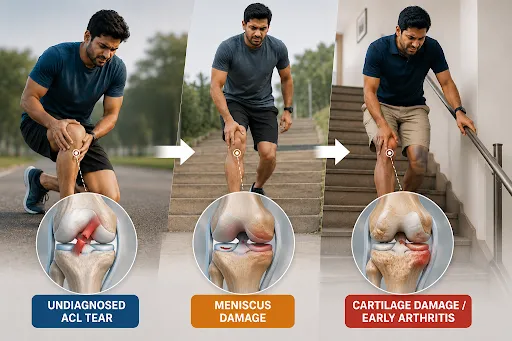
An untreated ACL tear can lead to persistent knee instability, repeated injuries, and progressive joint damage. Early diagnosis helps reduce long-term complications and improves treatment outcomes.
Long-term Joint Damage
Repeated episodes of knee instability increase abnormal joint loading, which can gradually damage cartilage and accelerate wear over time.
- Progressive cartilage deterioration
- Higher risk of early osteoarthritis
- Reduced long-term knee function
Meniscus Risk
An unstable knee places extra stress on the meniscus during twisting and pivoting movements, increasing the likelihood of secondary meniscus tears.
- Greater risk during daily activities
- May require additional treatment
- Delays recovery if untreated
Chronic Instability
Without proper treatment, the knee may repeatedly "give way," affecting confidence, mobility, and participation in work or sports.
- Frequent episodes of knee buckling
- Reduced balance and stability
- Limits physical activity over time
If you notice early signs of joint damage or ongoing knee instability after an injury, seeking comprehensive knee pain treatment can help prevent further complications and preserve long-term knee function.
How Are ACL Tears and Sprains Treated Differently?
Treatment for ACL tears depends on the injury severity and may involve surgery for unstable knees. Most knee sprains improve with conservative care, rehabilitation, and gradual return to activity.
Non-Surgical Management for Sprains
Most Grade I and II knee sprains improve without surgery using structured rehabilitation.
- RICE reduces pain and swelling
- Short-term bracing supports healing
- Physiotherapy restores strength and mobility
- Activity resumes as pain improves
Most patients recover well with personalised physiotherapy and rehabilitation programs tailored to their injury severity and functional goals.
When Surgery Is Recommended for ACL Tears
Surgery is commonly recommended for complete ACL tears causing instability, combined ligament injuries, or patients returning to pivoting sports.
- Complete ACL tear with instability
- Combined ligament or meniscus injuries
- Active individuals playing pivoting sports
- Reconstruction restores knee stability
Learn more about ACL repair surgery at Phoenix Medical Centre, for patients requiring surgical reconstruction and guided rehabilitation.
Recovery Timeline Comparison
| Recovery Factor | Knee Sprain | ACL Tear |
| Treatment | RICE, bracing, physiotherapy | Surgery or structured rehabilitation |
| Recovery Time | 2-8 weeks (most cases) | 6-12 months after reconstruction |
| Return to Daily Activities | Usually within weeks | Gradual, based on recovery progress |
| Return to Sports | After pain and stability improve | Only after strength, stability, and functional testing |
When Should You See an Orthopaedic Doctor?
Not every knee injury is an emergency, but certain symptoms can suggest more than a minor sprain and should never be ignored after an injury.
Red-Flag Symptoms That Need Medical Attention
- Can't bear weight comfortably
- Visible knee deformity
- Swelling persists beyond 48 hours
- Recurrent episodes of knee giving-way
Book an appointment with our orthopaedic team for an early assessment, if you have these symptoms and are looking for an orthopaedic doctor for knee injury near Dumdum.
Don’t Guess. Get Your Knee Checked Early!
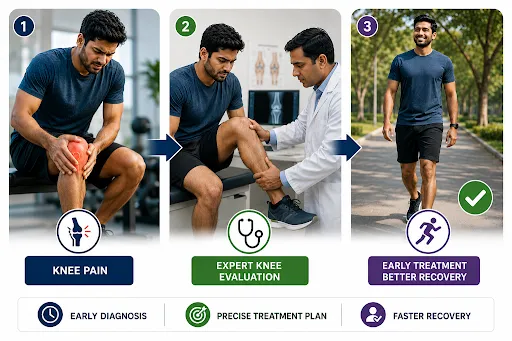
An ACL tear and a knee sprain may feel similar initially, but the underlying injury, treatment, and recovery can differ significantly.
Experiencing Persistent Pain, Instability, or Swelling - Never Ignore Them
- A [study] shows 50-80% of acute ACL tears involve a meniscal injury.
- 50% develop radiographic knee osteoarthritis within 10-20 years if instability persists- [Source]
So, rather than relying on symptoms alone, always seek a proper assessment to avoid delayed diagnosis and unnecessary complications.
Call 092309 78181 to book your knee check-up at our Dumdum centre for expert evaluation, personalised treatment, and surgical ACL repair when clinically required.
People Also Ask
Can you walk on a torn ACL?
Yes. Many people can still walk after an ACL tear, but the knee often feels unstable, especially when turning, pivoting, or changing direction. Walking does not rule out a tear.
How long does it take for a knee sprain to heal?
Most Grade I knee sprains heal within 2-4 weeks, while Grade II injuries usually recover in 4-8 weeks. Severe Grade III sprains may take several months and sometimes require surgery.
Does an ACL tear always require surgery?
No. Partial ACL tears and less active individuals may recover with rehabilitation. Surgery is commonly recommended for complete tears causing instability or for patients returning to pivoting sports.
Can an ACL tear heal on its own without surgery?
No. A completely torn ACL cannot rejoin or regenerate naturally because it has a poor healing environment inside the knee. Rehabilitation improves function but does not repair the ligament.
What is the popping sound when you tear your ACL?
The pop is usually the sound of the ACL fibres rupturing under sudden force. It commonly occurs during twisting, landing, or rapid direction changes and is often followed by swelling.
How can I tell if my knee injury is serious?
Seek medical assessment if you cannot bear weight, your knee gives way repeatedly, swelling persists beyond 48 hours, or you notice a visible deformity or significant loss of movement.
Is swelling always a sign of a torn ACL?
No. Swelling also occurs with knee sprains, meniscus tears, fractures, and other injuries. Rapid swelling within a few hours after injury is more suggestive of an ACL tear.
What’s the difference between a torn meniscus and an ACL tear?
An ACL tear mainly causes instability during movement, while a meniscus tear commonly causes joint-line pain, clicking, locking, or difficulty fully straightening the knee. Both injuries can occur together.
How is an ACL tear diagnosed without surgery?
Doctors diagnose an ACL tear using your injury history, physical tests such as the Lachman test, and an MRI to confirm the tear and identify associated knee injuries.
Can a sprained knee feel unstable like an ACL tear?
Yes. Moderate or severe knee sprains can temporarily feel unstable because of pain and ligament damage. Persistent giving-way, however, is more commonly associated with a complete ACL tear.