

Foamy urine after a rushed morning, socks leaving marks, or tiredness that refuses to lift can feel easy to explain away. Yet these changes can sometimes signal kidney problems. They do not prove kidney disease, but they deserve a sensible check, especially if diabetes or high blood pressure is part of your health history.
To help you understand when your kidneys need attention, we’ve covered what healthy kidneys do, how kidney disease symptoms may appear, which tests reveal hidden damage, and how timely care can protect kidney function.
What Do Your Kidneys Actually Do?
Your kidneys are two bean-shaped organs that filter your blood. Tiny units called nephrons remove waste and extra water, then return useful substances to the bloodstream. They also keep fluid, salts, and minerals such as sodium and potassium in balance.
The kidneys make hormones that help control blood pressure, produce red blood cells and keep bones healthy. In chronic kidney disease, ongoing damage affects these jobs. Early damage may produce no clear warning, so waiting for severe symptoms is unsafe.
Signs of Kidney Problems You Should Not Ignore
Yes, signs of kidney problems can show up in urine, skin, energy levels, and swelling. People often search for early signs of kidney failure, but mild symptoms can have many causes. One symptom alone doesn't confirm a diagnosis, but a persistent pattern warrants medical advice.
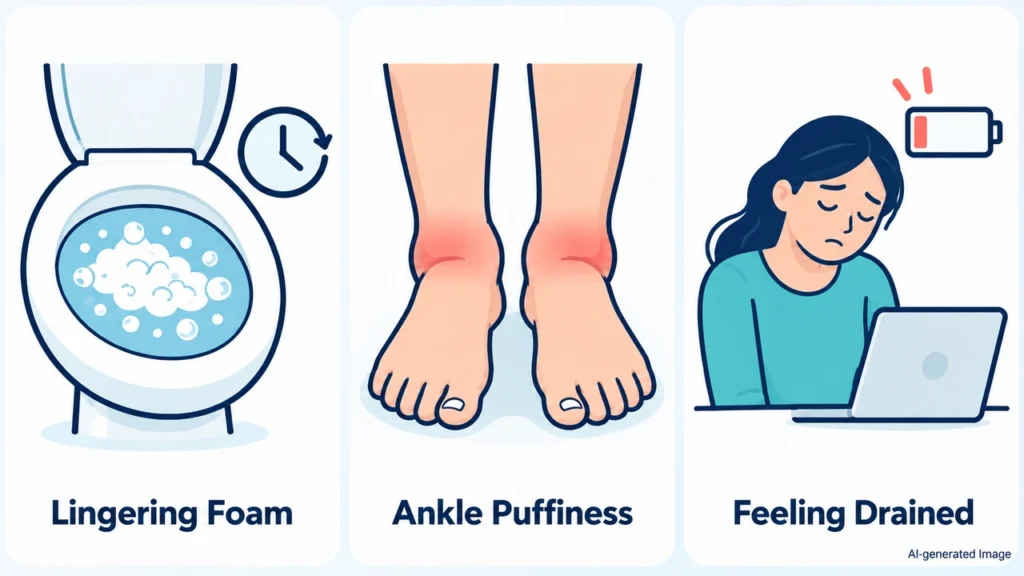
Foamy Urine: When Is It Normal and When Is It a Warning?
When we discuss causes of foamy urine, we first separate short-lived bubbles from persistent foam. A fast stream, concentrated urine, toilet residue, exercise or dehydration can cause bubbles that disappear quickly.
Thick foam that returns often may indicate protein in the urine. Damaged kidney filters can allow albumin to leak out. We check this with a urine test rather than judging urine by appearance alone.
Swelling in Legs, Feet, Ankles or Around the Eyes
Swelling in legs and feet may occur when the kidneys retain too much salt and fluid. Protein loss can also cause puffy eyelids, tight shoes, or sock marks. Heart, liver, and vein problems can cause similar swelling, so a doctor needs to check the cause.
Constant Tiredness and Weakness
Constant tiredness and ongoing fatigue may develop when waste products build up in the blood. Reduced kidney function can also contribute to anaemia, causing weakness, breathlessness, poor concentration and low energy.
Other Warning Signs
Other warning signs include changes in urination, repeated night-time trips to the toilet, blood-coloured urine, itchy skin, nausea, poor appetite, muscle cramps or trouble concentrating. High blood pressure can be both a cause and a consequence. Testing matters more than self-diagnosis.
Who is at Higher Risk of Kidney Disease?
The link between diabetes and kidney damage matters because high blood sugar can injure small kidney blood vessels. The connection between high blood pressure and kidneys is equally serious: raised pressure strains the filters and may speed up damage.
You may be at higher risk of kidney disease if any of these apply to you:
- A family history of kidney disease
- Older age
- Obesity
- Smoking
- Previous kidney stones
- Frequent use of painkillers such as ibuprofen or naproxen
Please note: Long-term or unsafe NSAID use can harm the kidneys, especially during dehydration. Risk does not mean disease, but it lowers the threshold for screening.
How to Protect Your Kidneys Every Day
- Hydration: Drink when you feel thirsty. Replace fluids during heat, vomiting, diarrhoea or hard physical work.
- No universal rule: There is no universal “eight glasses” rule. Advanced kidney disease, heart failure or dialysis may require a fluid limit.
- Diet: Choose a balanced diet and limit salt.
- Blood sugar and blood pressure: Keep both under control.
- Lifestyle: Stay active and stop smoking.
- Medicines: Avoid unsupervised painkillers or supplements.
- Get checked: If you have diabetes, high blood pressure, kidney stones or a family history of kidney disease, arrange a kidney check even when you feel well.
Please note: If you have diabetes, high blood pressure, stones, or a family history, arrange a kidney check even when you feel well. Which tests find hidden damage?
How Are Kidney Problems Diagnosed?
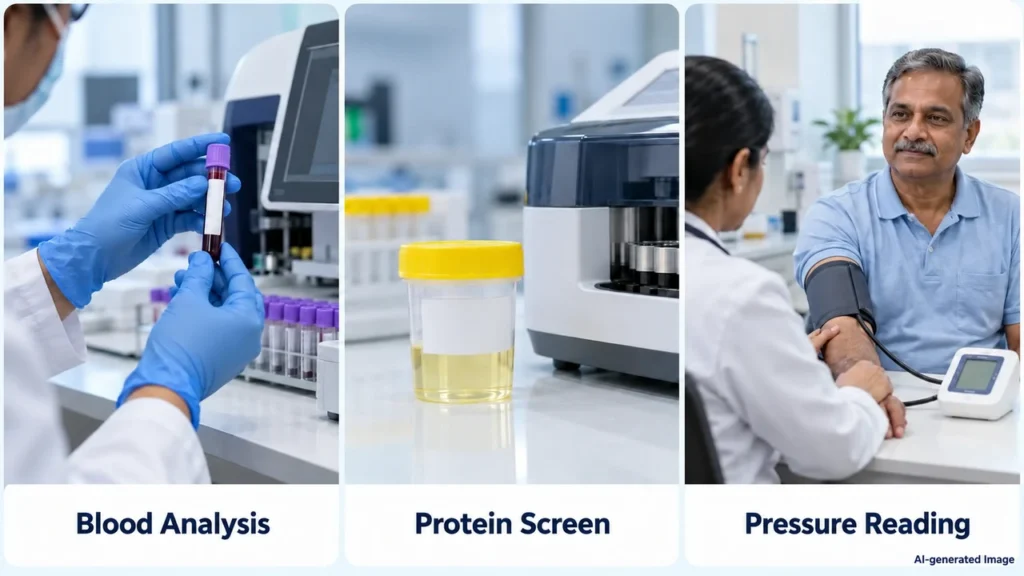
A kidney function test usually begins with blood and urine checks:
- Serum creatinine (blood test): Helps calculate the estimated glomerular filtration rate (eGFR).
- Urine dipstick or albumin-to-creatinine ratio: Checks for protein in the urine, which may appear before eGFR falls.
- Clinical review: We review your blood pressure, medicines and symptoms.
- Ultrasound: Can show kidney size, blockage, stones or structural changes.
- Repeat testing: Dehydration, infection or hard exercise can affect one result, so your clinician may repeat it and interpret the full pattern.
Why Early Detection Matters?
Chronic kidney disease is often quiet at first. By the time swelling, nausea, or severe fatigue appears, kidney function may already have fallen. Finding urine albumin, high blood pressure or a falling eGFR early gives us time to slow further loss.
Early care cannot reverse every problem, but it can protect remaining function, reduce heart risk and prevent rushed decisions later.
What are the Treatment and Management Options?
Treatment depends on the cause and stage of kidney disease. It may include:
- Medicines: For blood pressure, protein leakage, diabetes, infection or anaemia.
- Renal diet plan: Adjusts salt, fluid, protein, potassium or phosphorus to your test results. Do not copy another patient’s plan.
- Dialysis or transplant assessment: May be needed in advanced kidney failure.
- Specialist support: Some patients also need diabetology, cardiology, nutrition or critical-care input.
- Critical Care at Phoenix Medical Centre: We list dialysis support, ICU care and emergency services for complex cases.
Nephrology Treatment at Phoenix Medical Centre
If you are looking for nephrology treatment in Dumdum, we can assess your symptoms, risk factors and test results in one place, with access to a critical care unit when needed. Related departments, including diabetology, cardiology, nutrition and general medicine, can support your treatment plan as required.
Let’s Take the First Step Towards Better Health
Returning foam, unexplained swelling and tiredness that affects daily life deserve attention. The signs of kidney problems can have other causes, but blood and urine tests can clarify the next step. Don’t delay if you’re considering nephrology care. A nephrologist at our healthcare facility in Dumdum can help you if you’re experiencing persistent foam, swelling, abnormal creatinine, protein loss, or difficult blood pressure control.
What People Also Ask
Can kidney damage be reversed?
Some acute kidney problems improve when dehydration, infection, blockage or a harmful medicine is treated quickly. Long-standing damage may not be fully reversible, but treatment can slow progression and preserve remaining function.
How much water should you drink to keep your kidneys healthy?
There is no single amount for everyone. Drink regularly and respond to thirst, but follow a personalised limit if kidney disease, heart failure or dialysis affects fluid balance. Too much water can also be harmful.
Do painkillers like ibuprofen damage the kidneys?
Regular, high-dose or unsupervised NSAID use can reduce kidney blood flow and trigger acute injury, especially during dehydration. Ask a doctor or pharmacist before repeated ibuprofen use if kidney disease, diabetes or hypertension is present.
How often should a diabetic or hypertensive person get a kidney function test?
People with diabetes generally need kidney blood and urine checks at least once a year. With high blood pressure, timing depends on readings, medicines and other risks. Abnormal results usually require closer monitoring.
Is a high-protein diet or gym supplements bad for the kidneys?
Healthy adults may tolerate a suitable protein intake, but extreme diets and unmonitored supplements are not automatically safe. Kidney disease changes protein needs, and creatine can complicate creatinine results. Discuss supplements with a clinician first.