
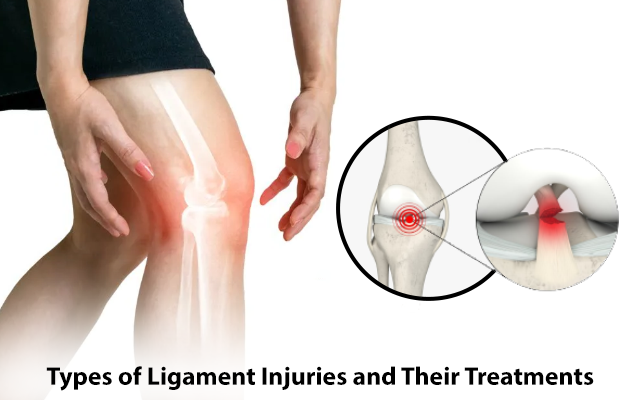
Imagine you’re playing your favorite sport or just going about your daily routine, and suddenly you twist your knee or ankle. You feel a sharp pain, swelling sets in, and moving the joint becomes tough. Chances are, you’ve injured a ligament.
Ligaments are strong bands of tissue that connect bones and keep your joints stable. When overstretched or torn, they can cause serious discomfort and limit mobility.
Let’s break down the most common types of ligament injuries and how they’re treated.
Ankle Ligament Injuries
One of the most common ligament injuries is a sprained ankle. This usually happens when your foot twists inward, stretching or tearing the ligaments on the outside of your ankle.
Symptoms:
- Swelling
- Bruising
- Pain while walking
- Limited range of motion
Treatment: Most mild to moderate sprains can be treated with the RICE method: Rest, Ice, Compression, and Elevation. In more serious cases, physical therapy may be needed to restore strength and balance. Severe tears may require surgery.
Knee Ligament Injuries
The knee has four major ligaments, ACL, PCL, MCL, and LCL and Injuries often occur during sports or sudden impacts.
ACL (Anterior Cruciate Ligament) injuries are common in football, basketball, and skiing.
Symptoms: Popping sound, swelling, instability.
Treatment: Rest, bracing, physical therapy, or surgery in severe cases.
MCL (Medial Collateral Ligament) injuries often result from a direct blow to the outer side of the knee.
Symptoms: Pain on the inner side, swelling, stiffness.
Treatment: Bracing, physiotherapy, rarely surgery.
Wrist Ligament Injuries
Falling on an outstretched hand can lead to torn wrist ligaments.
Symptoms:
- Pain during movement
- Swelling
- Weak grip
Treatment: Rest and a splint are often enough for minor injuries. For complete tears or if the joint becomes unstable, surgery might be required to repair the torn ligament.
Shoulder Ligament Injuries
These injuries are usually the result of falls or direct blows to the shoulder. The most common is the AC (acromioclavicular) joint sprain.
Symptoms:
- Pain at the top of the shoulder
- Swelling
- Bump over the joint
Treatment: Mild injuries heal with rest, ice, and a sling. More severe cases may need surgery to realign and stabilize the joint.
Conclusion
If you notice persistent pain, swelling or instability in a joint after an injury, don’t wait it out. Timely treatment can prevent long-term damage.
People looking for orthopedic treatment in Dumdum can find expert care suited to the type and severity of their injury. At Phoenix Medical Centre, we understand how frustrating ligament injuries can be.
Our experienced team offers personalized treatment plans to help you recover quickly and safely, so you can get back to doing what you love.
Book an appointment today and take the first step toward a pain-free life.